Cerasa Castle
In the period from the 12th to the 15th century, numerous castles of the “Comitato di Fano” were built and developed on the plain and hills to the left of the Cesano river. The first news about Cerasa, currently part of the municipal territory of San Costanzo, dates back to the Bull of Pope Adrian IV of 7 May 1156, later confirmed by the similar Bull of Pope Alexander III of 18 April 1178. In both Bulls, the Castle of Cerasa is mentioned under its ancient name of “Quercia fissa” or “Quercia Scissa”.
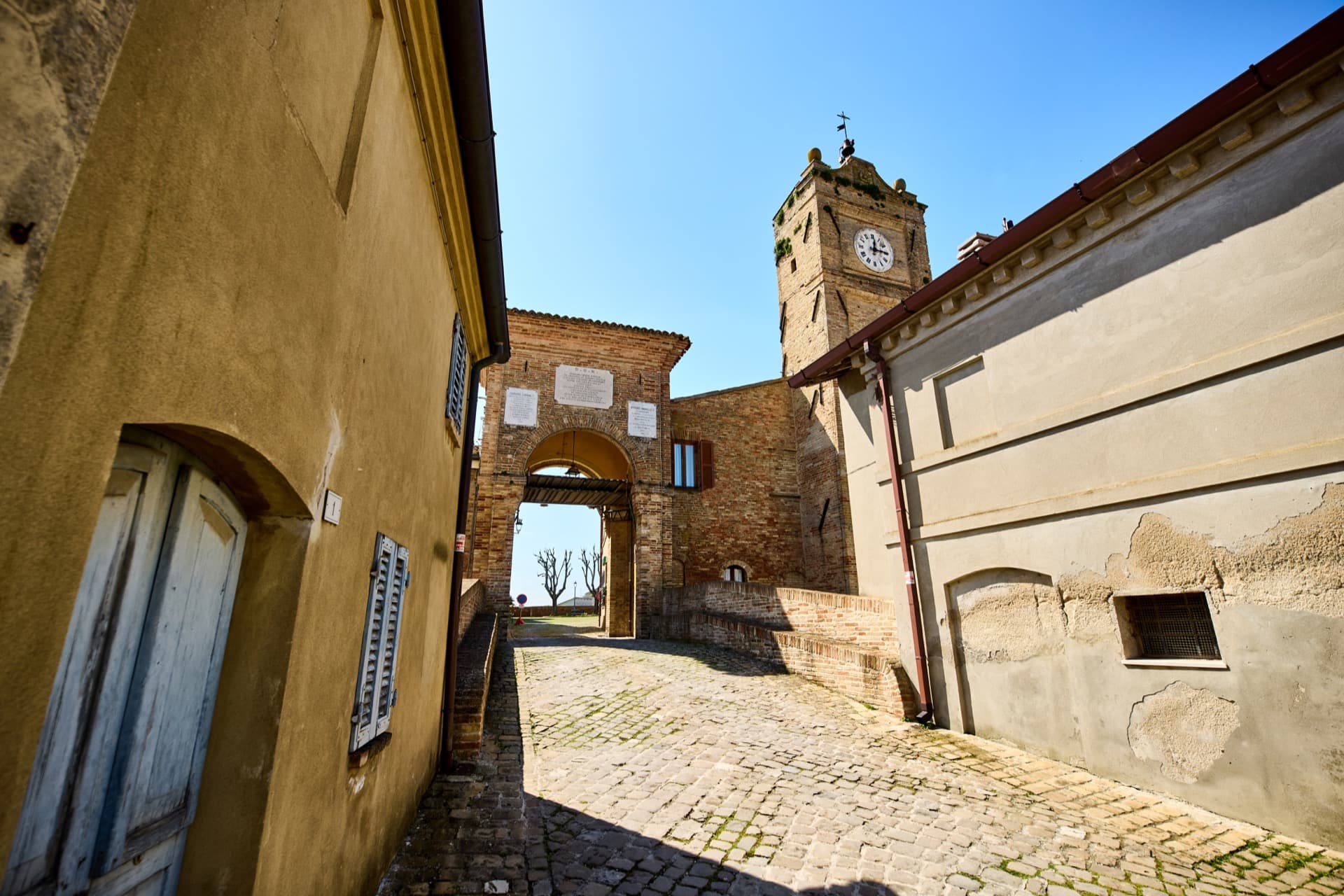
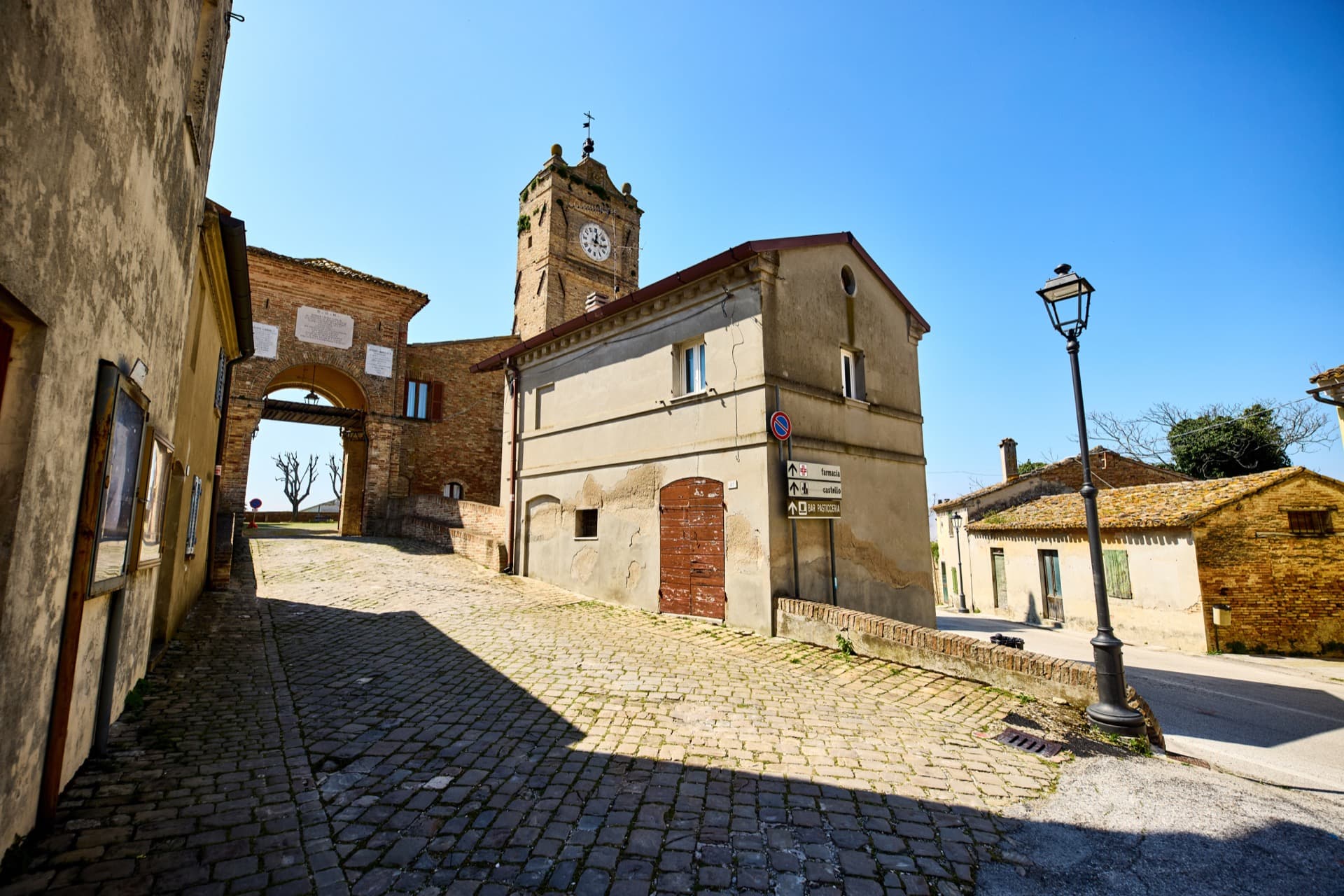
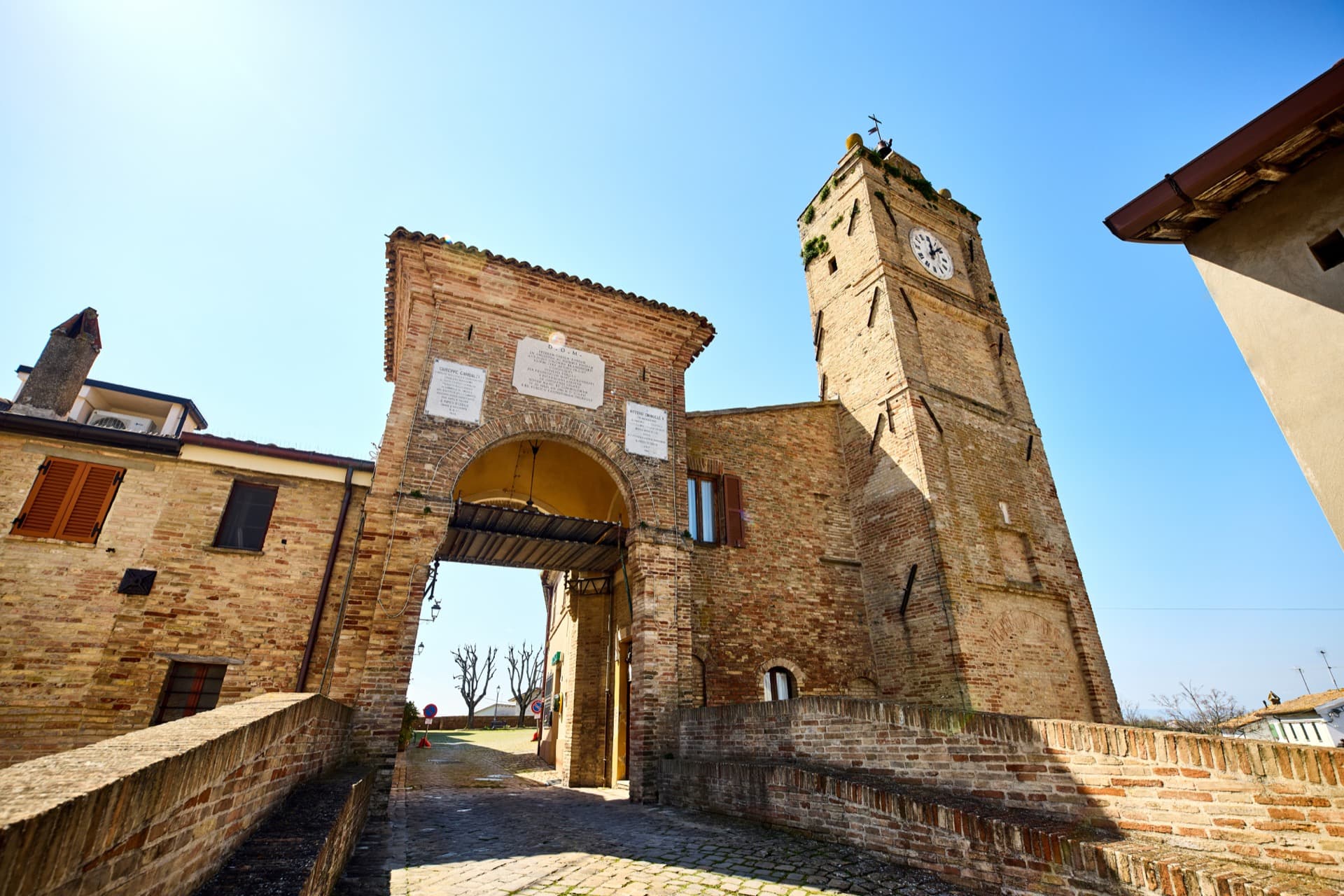
The ancient medieval walls, perfectly intact, envelop this small, enchanting village like an embrace. When the castle was demolished in the 13th century, the monks of S. Paterniano used its rubble to build another on top of a hill not far away, called “Monte della Ceregia” from which the present name “Cerasa” derived. In 1380, a later Martinozzi named Domenico, also an Abbot, had the “Castle of Ceregia” restored and fortified with the unselfish and free work of all the castellans. In 1432, Ceregia, now Cerasa, despite being a small centre, did not hesitate to challenge the nearby San Costanzo and the powerful Malatesta Fano in order to defend the integrity of its borders. As has already been written, regarding the birth and development of the numerous castles of the “Fano Committee”, it should be noted that 18 of them, by now tired of the Fanese misrule, rose up against it and, instigated by Pandolfo II, appealed to Pope John XXII in Avignon against the Fanesi. The Pope welcomed the appeal very favourably, removed from the dominion of the city of Fano and subjected 18 castles of the “comitato quondam Fani” directly to the Church, i.e. to the rector of the Marca, forming the original nucleus of the vicariate of Mondavio. The castle of Cerasa remained outside this vicariate, but became part of it in the first half of the 15th century. The vicariate of Mondavio remained in subjection to the Church only for a few years because the Malatesta family always ruled it legitimately. In 1429, after a succession of family vicissitudes, with the death of Carlo Malatesta the vicariate of Mondavio returned to the Church, but only until 1433 when the Marca region was devastated by a rapid invasion by Captain Francesco Sforza of Milan, who conquered the vicariate of Mondavio. The two towers and the entrance gate with ramp are still visible, while inside the castle you can visit the Church of San Lorenzo Martire, with its baptismal font from 1629 and a Callido organ. The portal of Casa Giraldi, in terracotta and sandstone, is also noteworthy.
Galleria
Dove
Altre Informazioni
Categorie
Storico, Architettura
Eventuali servizi
Free admission
Potrebbe interessarti anche

San Costanzo - i luoghi digitali dell'altrove - Questo intervento è stato realizzato con il contributo dell’Unione europea Bando POR FESR Marche 2021-2027 - Asse 1 - Azione 1.2.2 - Int. 1.2.2.2 Bando per “Servizi digitali integrati”



