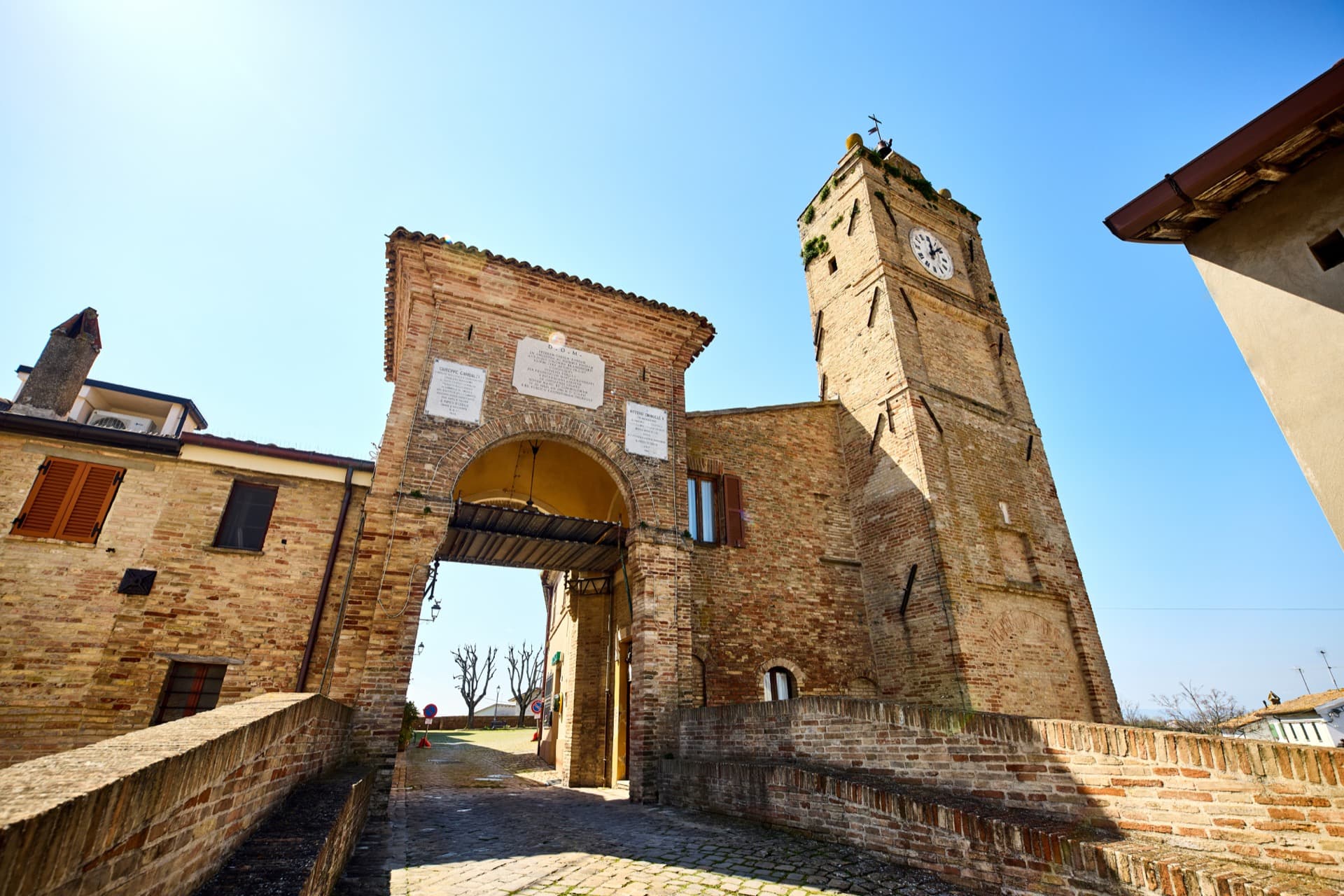
The tour begins in the heart of San Costanzo, a village rich in history, art, and traditions.
With this city tour, you'll discover all the places that characterize San Costanzo.
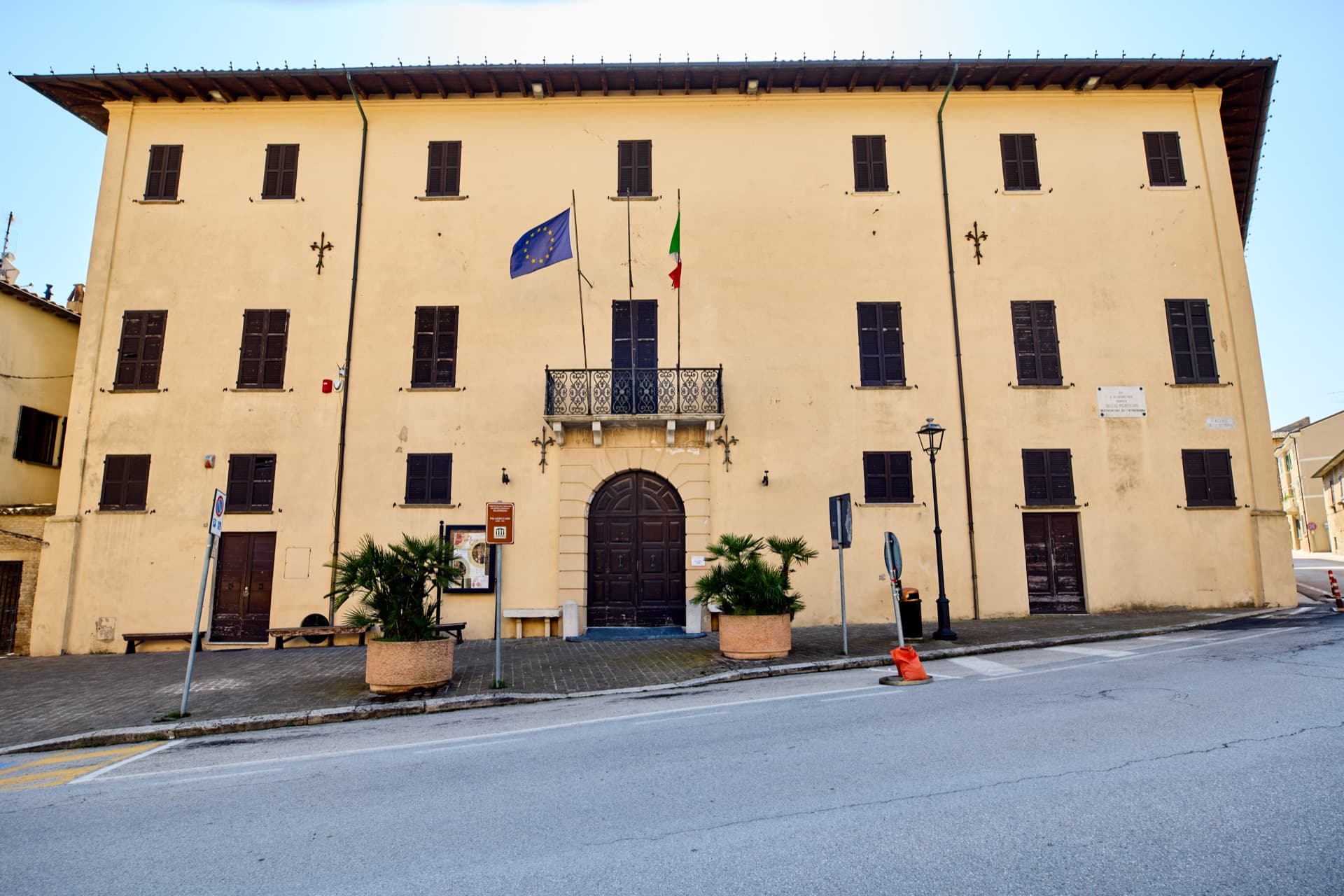
Cassi Palace
Palazzo Cassi, situated in the heart of San Costanzo, is an elegant historic residence of extraordinary cultural and architectural significance, a symbol of the village’s aristocratic and intellectual tradition. It was built in the 18th century by the Cassi family of Pesaro as a summer residence. The palace is the result of the harmonious union of three residential units: Palazzo Mei, purchased by Count Francesco Cassi in 1814, and two palaces previously belonging to the Diotallevi family. At the turn of the 18th and 19th centuries, the building experienced a golden age of culture and literary activity, thanks precisely to the distinguished friends with whom the Cassi family boasted. Indeed, among the distinguished guests were the Counts Ferri and Martinozzi, the man of letters Count Giulio Perticari—a cousin of Count Cassi—along with his beautiful wife Costanza, daughter of the renowned poet Vincenzo Monti. Count Giulio Perticari died, after a long illness, in this very Renaissance residence. Following his death, rumours were spread about his beautiful wife, Costanza, a much-admired woman of great literary culture. In 1863, the San Costanzo Town Council approved the purchase of the building to establish the Town Hall, which remained there until 2005; however, following a thorough restoration, completed in 2013, it was returned to the community as a cultural and social centre. In 1978, it housed the first municipal library, which still resides there today, carrying out a constant and important book lending service. In 1997, the then Municipal Administration decided to undertake a major cultural initiative, setting up an exhibition of ancient paintings from its own collection in the Municipal Picture Gallery; altarpieces from the demolished Church of San Silvestro and from other unknown sources, such as oratories and religious chapels in the San Costanzo area which, due to neglect or changes in the social-religious fabric, had been abandoned. This was an initiative of great cultural value, as it brought together in a single exhibition the testimony of those furnishings that document centuries of religious life and diverse forms of figurative art.
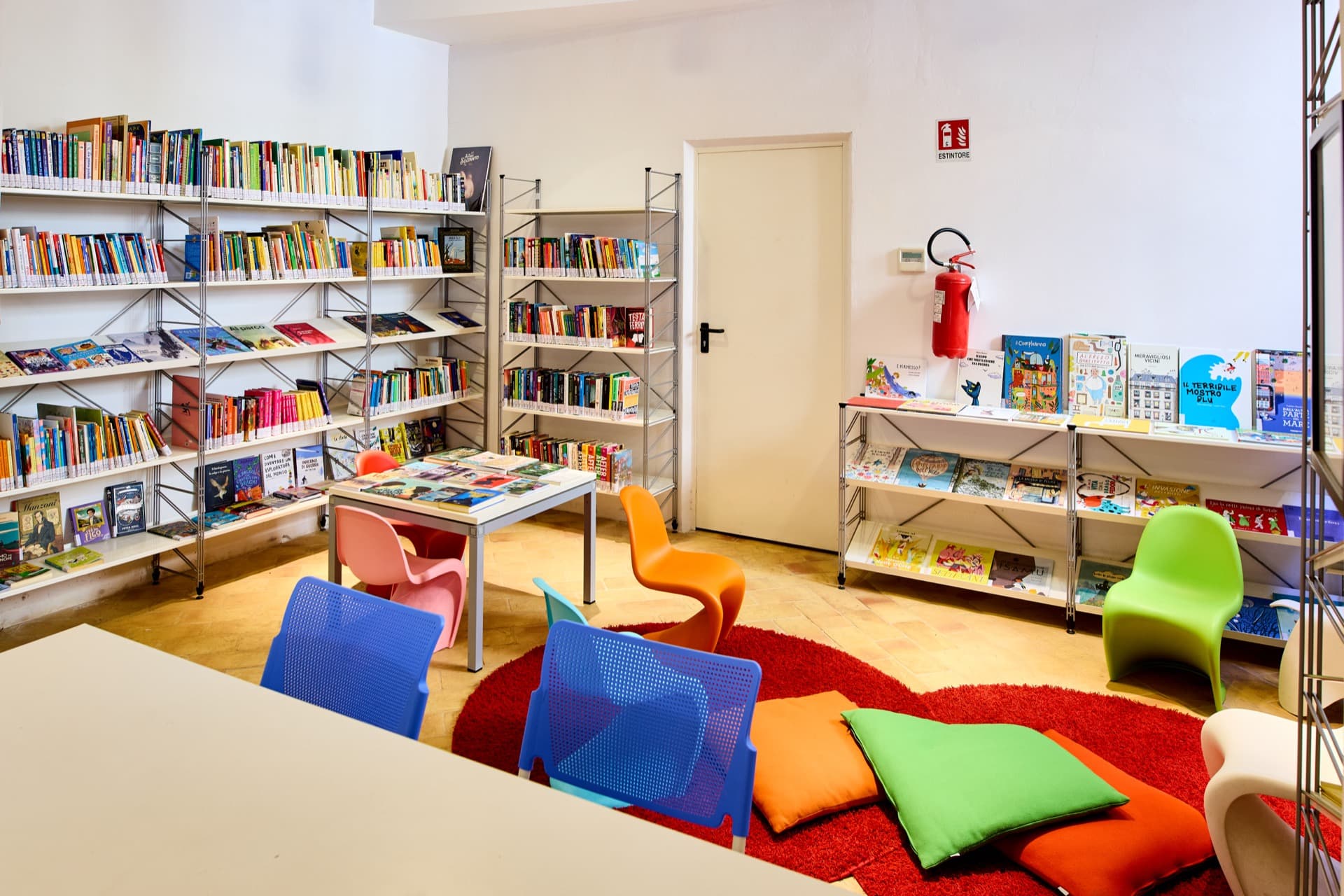
"Don Antonio Betti" Library
The library's new location, located on the ground floor of Palazzo Cassi, was inaugurated in 2013, following the renovation of the entire building by the Cassa di Risparmio di Fano Foundation, and is named after Don Antonio Betti. It offers users approximately 6,000 volumes, divided into fiction, popular literature, and local works. All materials, for adults, teens, and children, are displayed on open shelves. The library has approximately twenty study and reading stations for users and four fixed stations for internet browsing and research. There is also a dedicated area for children aged 0 to 6, with soft furnishings and illustrated books from the "Born to Read" project, and another with projectors for events and meetings. It offers reference services, bibliographic consultation, and local and inter-system lending. E-reader lending is available, with over 100 titles to choose from.
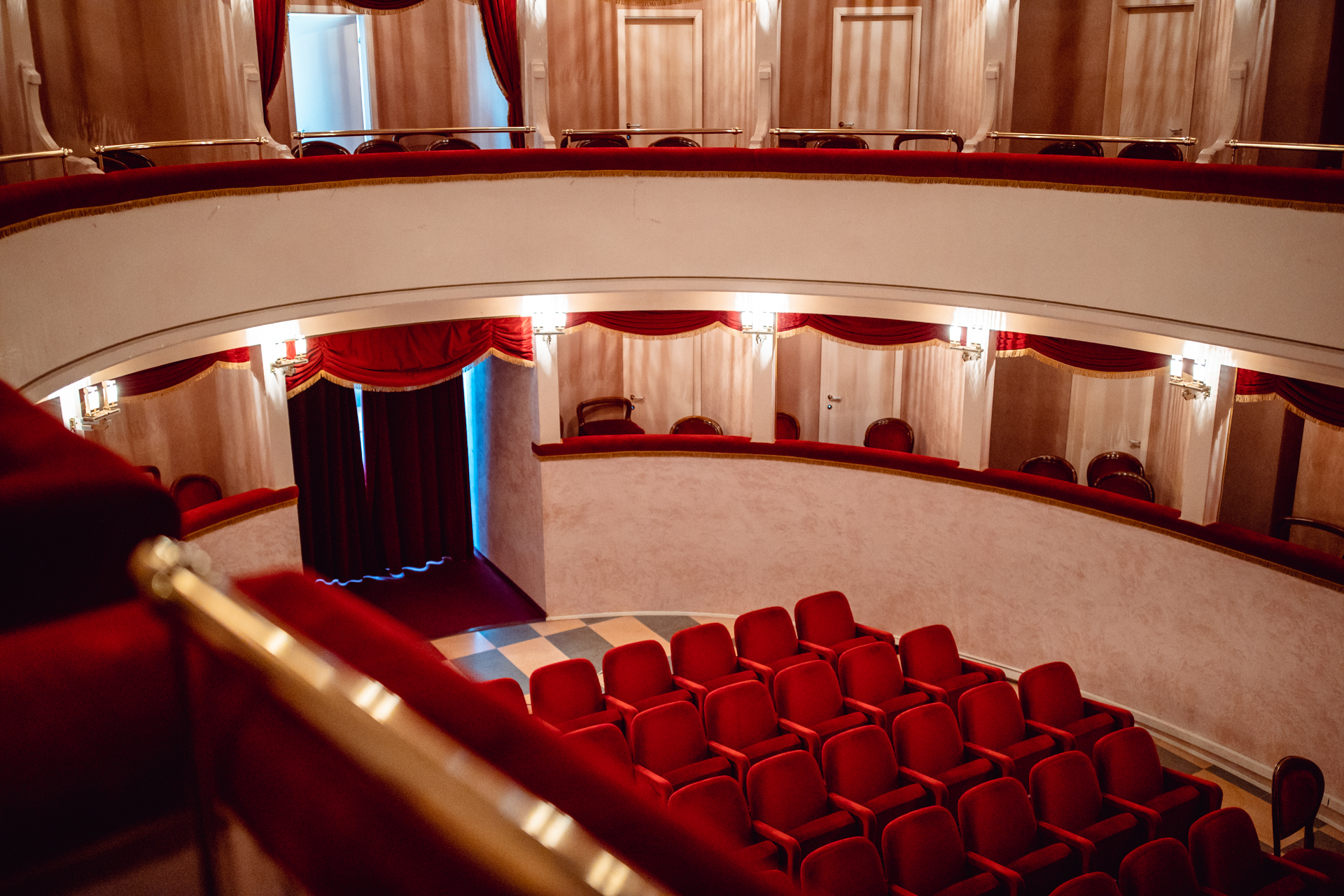
Concordia Theater
Erected on 18 March 1721 in a Hall of the South Eastern Residential Wing of the castle. Francesco Cassi, Giulio Perticari and General Guglielmo Pepe performed there. Vincenzo Monti's tragedies were previewed inside.
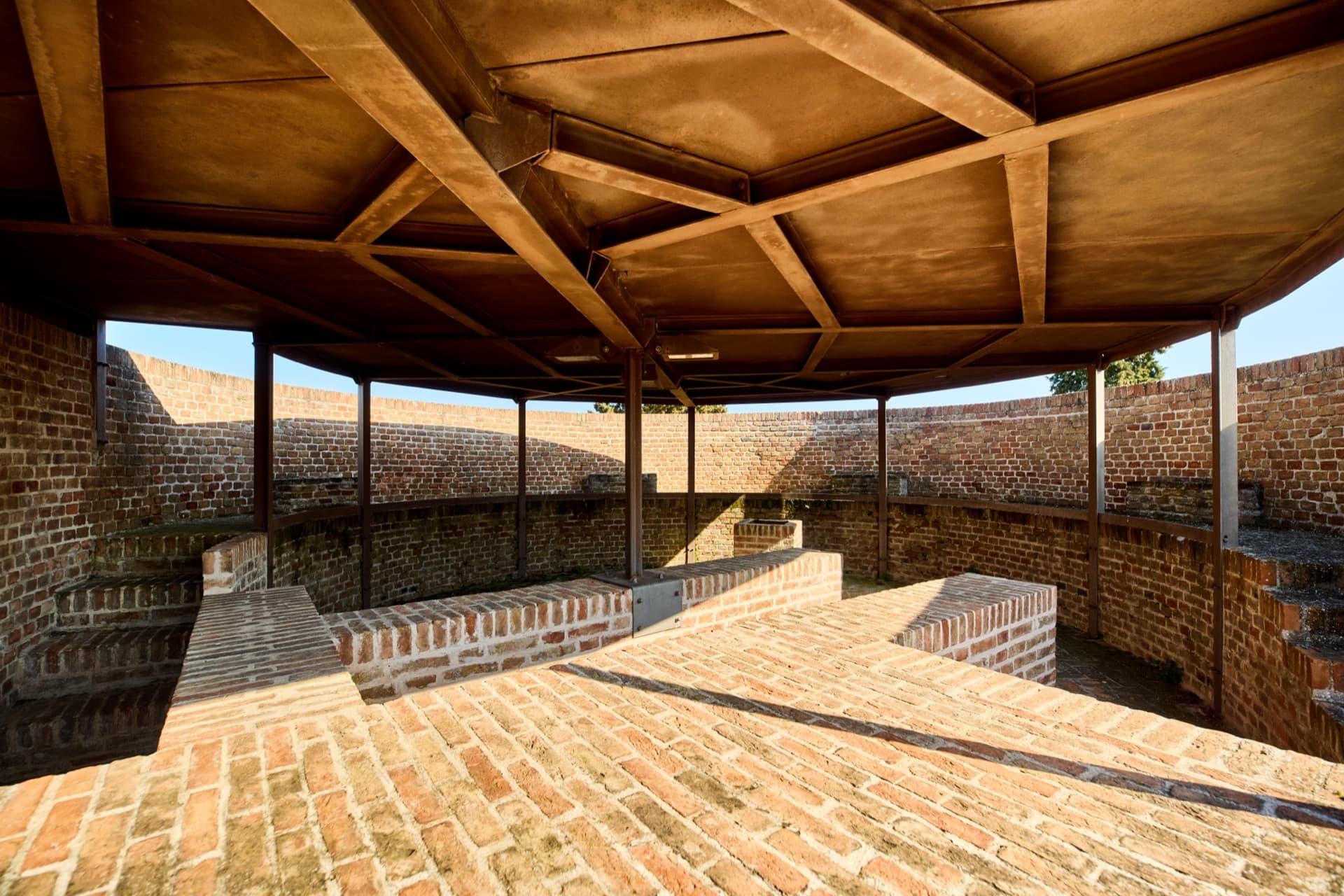
Panoramic Tower
Reconstruction of the 14th century medieval tower. The northeastern tower, within the castle walls, is now the panoramic tower, as it can be accessed and admired over the San Costanzo hills. Inside, there is a room accessible via an ancient staircase.
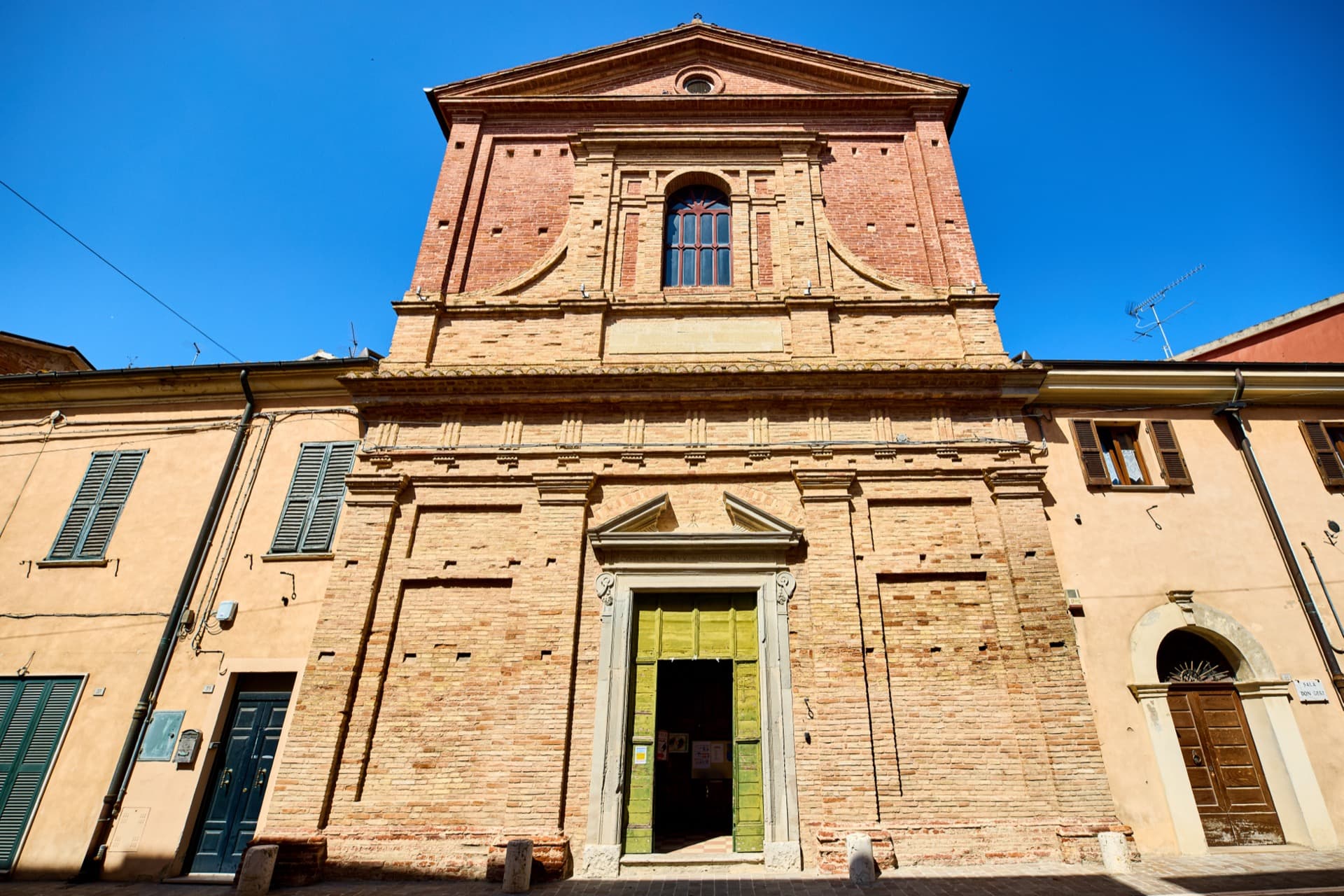
Church of Sant'Agostino
The foundation stone was laid on 27 September 1610, erected thanks to the generosity of Count Pietro Barbetta and the community of San Costanzo. There are five altars in the church adorned with well-made stuccoes. Of particular interest are the paintings, all inspired by devotions dear to the Augustinians: the Crucifix, the Madonna, St. Augustine and St. Nicholas. The marble high altar is surmounted by a large oval painting with a gilded frame depicting St. Peter the Apostle; behind it is a fir tree choir. On the side walls of the presbytery you can also admire two large canvases made in 1787 by the painter Giuseppe Ceccarini: a Miracle of St Nicholas of Tolentino on the right, the Tomb of St Augustine on the left. In the first altar on the right, for those entering the church, there is a Madonna del Carmine oil on canvas. In the second Altar, a canvas of equal size represents St Nicholas of Tolentino. In the first Altar on the left is a Crucifixion, oil on canvas, painted in Fano in 1785 by Giuseppe Ceccarini. Under this Altar, inside a glass urn, is the wooden simulacrum of the Dead Christ made in Ancona in 1826 by Filippo Reali, a pupil of Canova. Nel secondo altare di sinistra è incorniciata da gradevoli stucchi la Madonna della Cintura, olio su tela. Nella chiesa si può ammirare anche una statua del Cristo Risorto del 1871. Alle pareti sono appesi quattordici piccoli quadri di carta a ricordo della Via Crucis. Nella Settimana Santa viene allestita in questa chiesa “La Machina di Legno del Monte Calvario” con rievocazione della passione e morte di Nostro Signore. Sul Monte Calvario si possono ancor oggi ammirare le statue rappresentanti la Madonna, San Giovanni Evangelista, La Maddalena e il Gran Sacerdote. Dalla stessa Chiesa, la sera del Venerdì Santo, si snoda una suggestiva processione, retaggio di un’antichissima tradizione, con il simulacro del Cristo Morto deposto su un cataletto con quattro lumiere seguito dalla statua della Madonna Addolorata. Nella Cantoria, al di sopra dell’entrata principale, fa bella mostra un pregevole organo, opera del veneziano Gaetano Callido.
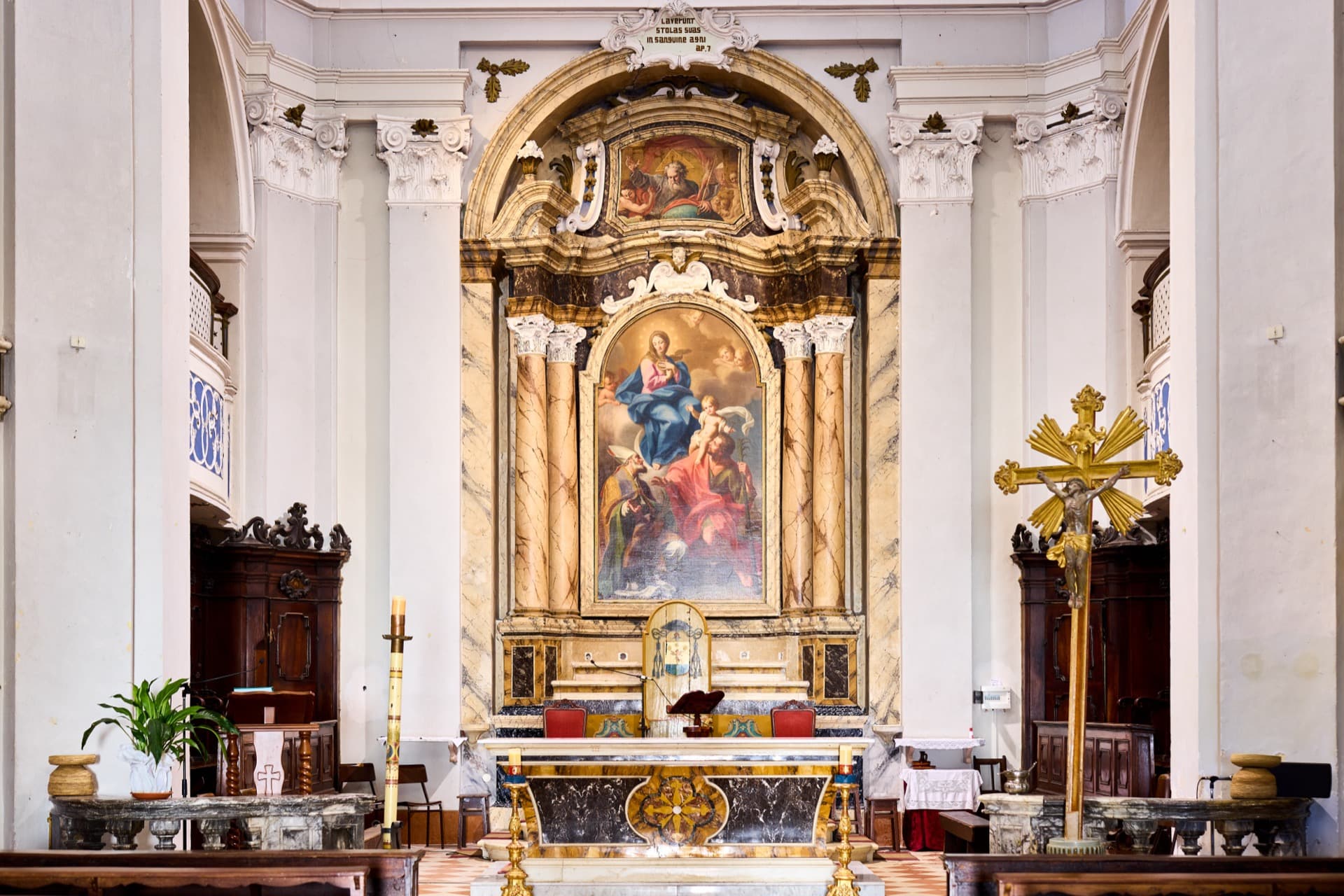
Parish Collegiate Church
The Collegiate Parish Church began to be built in the year 1570, in the southern part of the castle of San Costanzo, recovering the structure of an ancient and capacious hall. On 6 October 1607, Pope Paul V signed the Bull with which the Parish Church of Saints Christopher and Constanzo was elevated to the rank of Collegiate Church. The parish church has seven altars inside. On the high altar is a walnut choir with twelve seats. In the same altar, one can admire a small painting depicting the Eternal Father and a larger Madonna and Child with Saints Christopher and Constans. The first altar on the right houses a Nativity scene, oil on canvas, by Ercole Ramazzani from Arcevia. The second altar on the right is in the chapel dedicated to the Blessed Sacrament, adorned with four medallions with the Evangelists and two canvases depicting a Foot Washing and The Last Supper. The third altar on the right is surrounded by fifteen panels representing the Mysteries of the Rosary. The first altar on the left venerates an ancient wooden Crucifix from the 15th century. The second altar on the left houses a Madonna of Mercy, oil on canvas, by the painter Matteo Zuccaroli. The third altar on the left contains a Virgin and Child with Saints, oil on canvas, attributed to Domenicus Fanensis. On the walls of the temple are fourteen 18th-century canvases depicting the Stations of the Cross. The main entrance door is surmounted by a wooden Cantoria (choir loft) where an Antique Organ with 25 pipes is located.
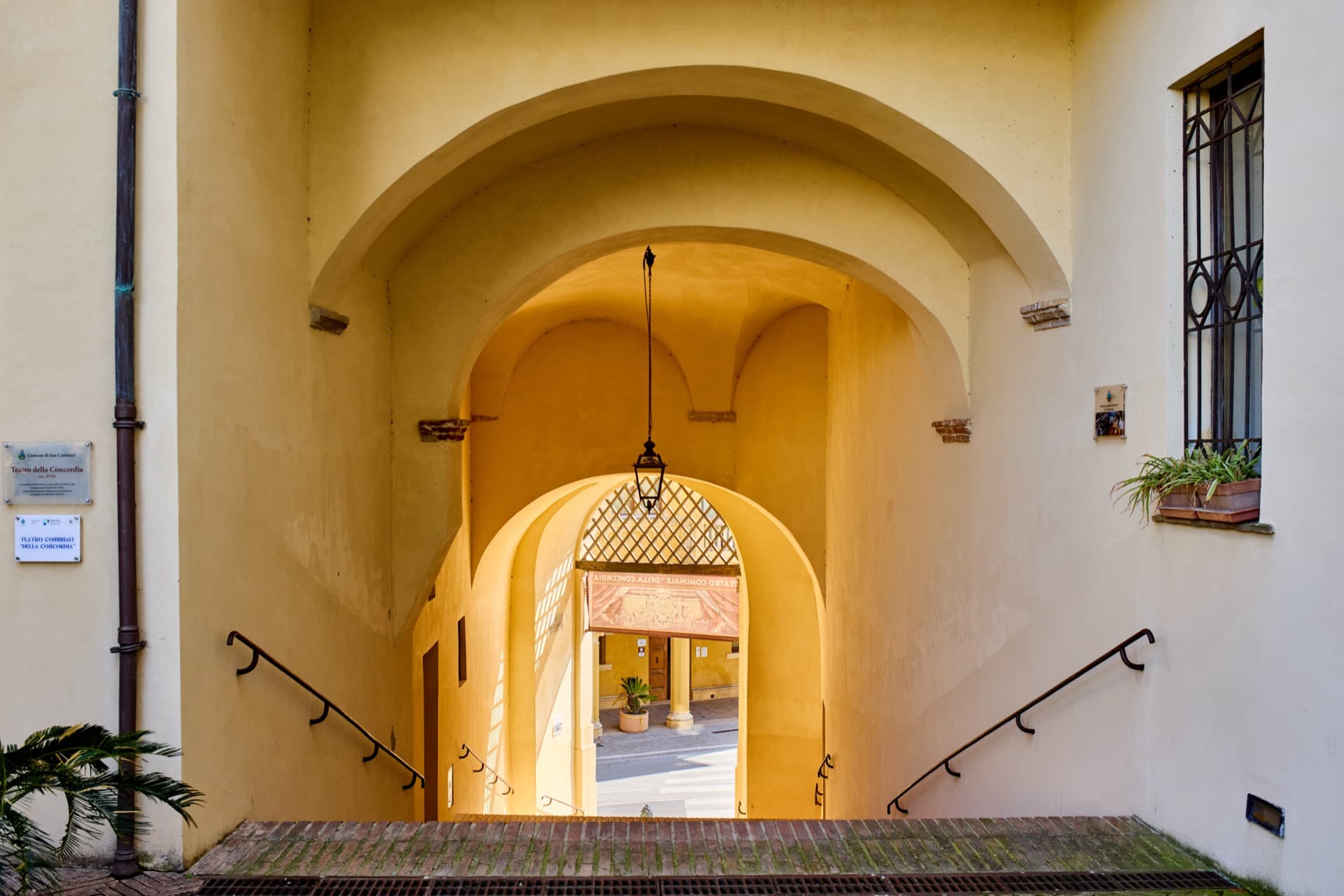
Stairway of the Polenta Masters
The ‘Scalinata dei maestri polentari’ (Stairway of the Polenta Masters) is a stairway located in San Costanzo, dedicated to the town's polenta masters, which leads to the town theatre. It was inaugurated in March 2023 and is closely linked to the history of the Sagra Polentara, one of the oldest festivals in the Marche region, which takes place annually in the summer.
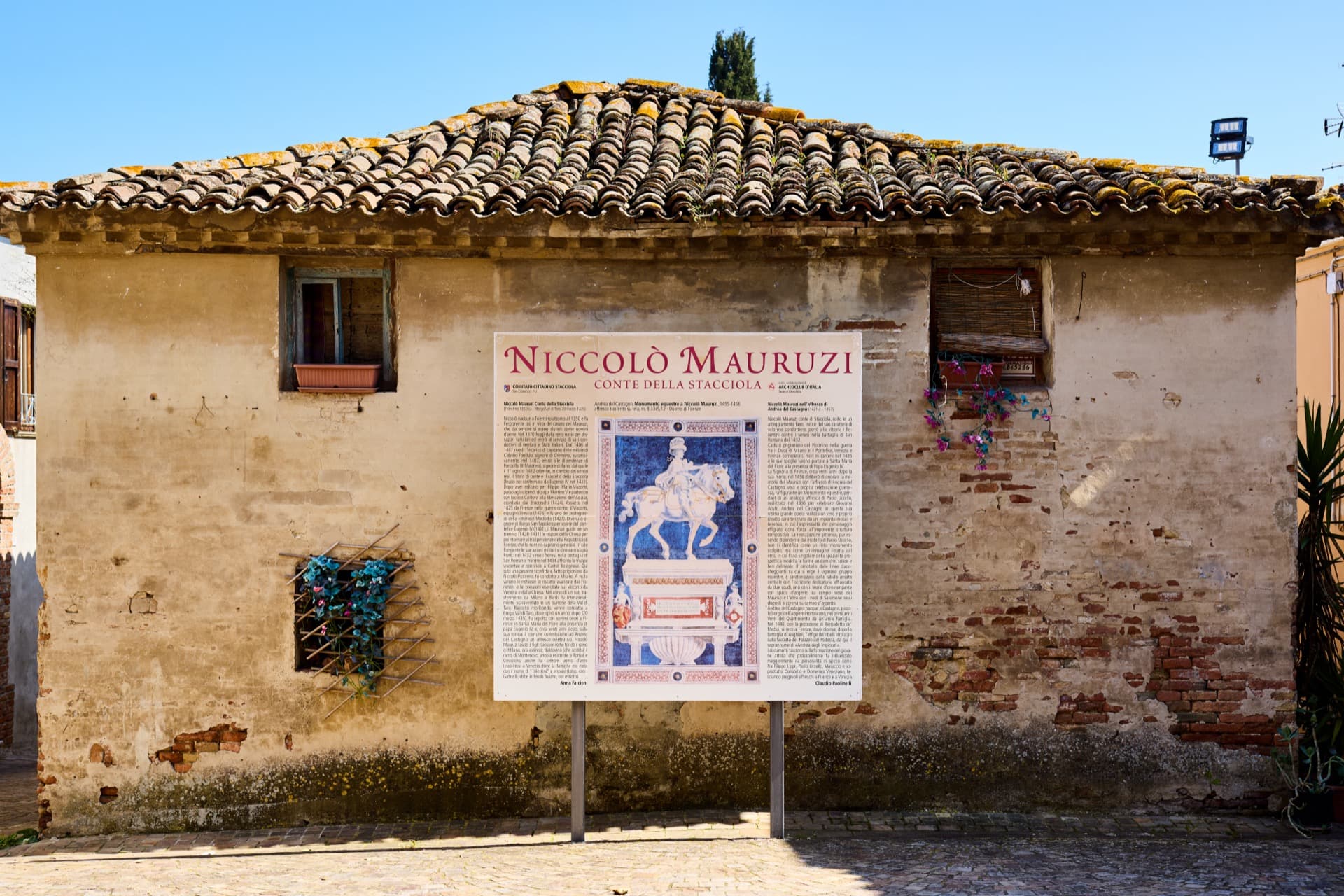
Niccolò Maurizi Square
The square in the village of Stacciola is named after Captain Niccolò Mauruzi da Tolentino, Count of Stacciola and valiant military leader. He was born in Tolentino around 1350 and was the most prominent member of the Mauruzi family. Captain Niccolò Mauruzi fled his homeland in 1370 due to family disagreements and entered the service of various mercenary leaders and Italian states. From 1406 to 1407 he served as captain of the militia of Cabrino Fondulo, lord of Cremona. In 1407 he entered the employ of Pandolfo III Malatesti, lord of Fano, from whom on 1 August 1412 he obtained the title of count and the Castle of Stacciola in exchange for services rendered. After militating for Filippo Maria Visconti, he went on the payroll of Pope Martin V and took part in the liberation of the Eagle, besieged by the Bracelets (1424). In 1425 he was employed by Florence in the war against the Viscontis and conquered Brescia in 1426. Having become lord of Borgo San Seppolcro, Mauruzi led the troops of the church for a three-year period (1428-1431) before returning to the republic of Florence, which appointed him captain general. At this juncture his military actions were directed on several fronts: in 1432 he defeated the Sienese at the Battle of San Romano, while in 1434 he faced the Visconti and Papal troops at Castel Bolognese. Here he suffered a heavy defeat and, taken prisoner, was taken to Milan. During his transfer from Milan to Bardi, he was intentionally thrown into a ravine in the Val di Taro. Picked up dying, he was taken to Borgo Val di Taro, where he died on 20 March 1435. He was buried with great honours in Florence in Santa Maria del fiore and, about twenty years later, the municipality commissioned Andrea del castagno to paint a commemorative fresco on his tomb.
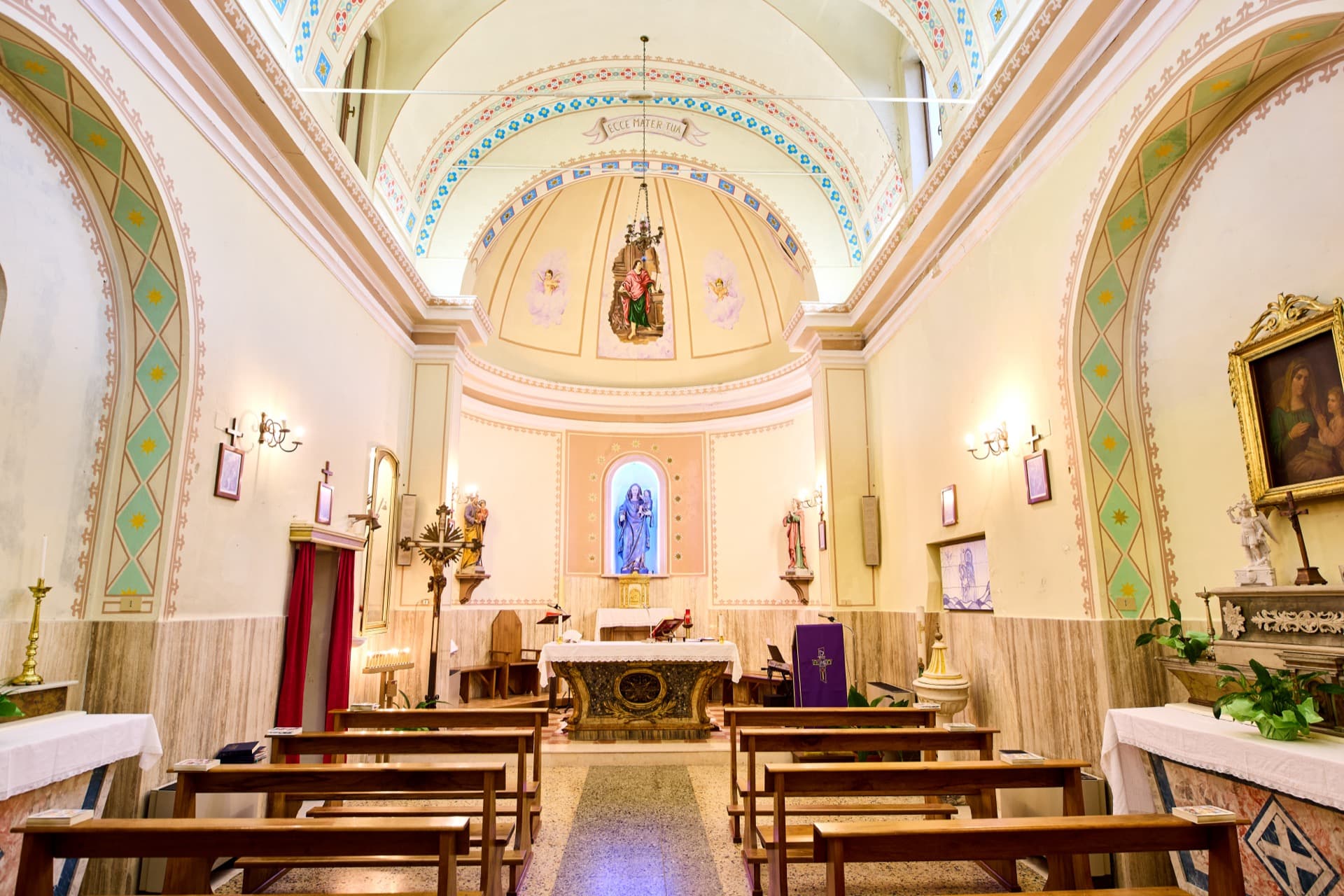
Church of San Giovanni Evangelista
Formerly an aristocratic chapel of the Counts Mauruzi da Tolentino who were subjugated to the Stacciola Castle by Pandolfo Malatesta in 1412. The church only became a parish church when the other church extra muros was demolished in the 17th century. The interior was remodelled later. The façade is almost unadorned, with the exception of the portal showing lightly on the white-painted plastered wall. A simple rectangular window is in axis with the portal, above it the pitches of the pitched roof are emphasised by the cornice. The bell tower leans to the left of the church, joining the roof with a triangular wall. The belfry is framed by pilasters with stepped capitals and ends with a cusped roof. The base of the steeple bell tower protrudes from the edge of the church wall. A clock is mounted under the belfry. The interior of the church has a single hall with a hemispherical apse. The side walls have two niches with altars ended by round arches. Following the partial collapse of the roof in 1989, the church was restored and reopened in 1993, on which occasion all the interior decorations with polychrome geometric motifs were handmade by the stacciolani, tracing the original ones. The presbytery rises above the hall with a step, the movable altar is made from salvaged elements of the original altar and houses the relics of Saint Tranquillus. Behind it, a niche houses the statue of the Virgin and Child Jesus. Above the entrance is the chancel with the organ.
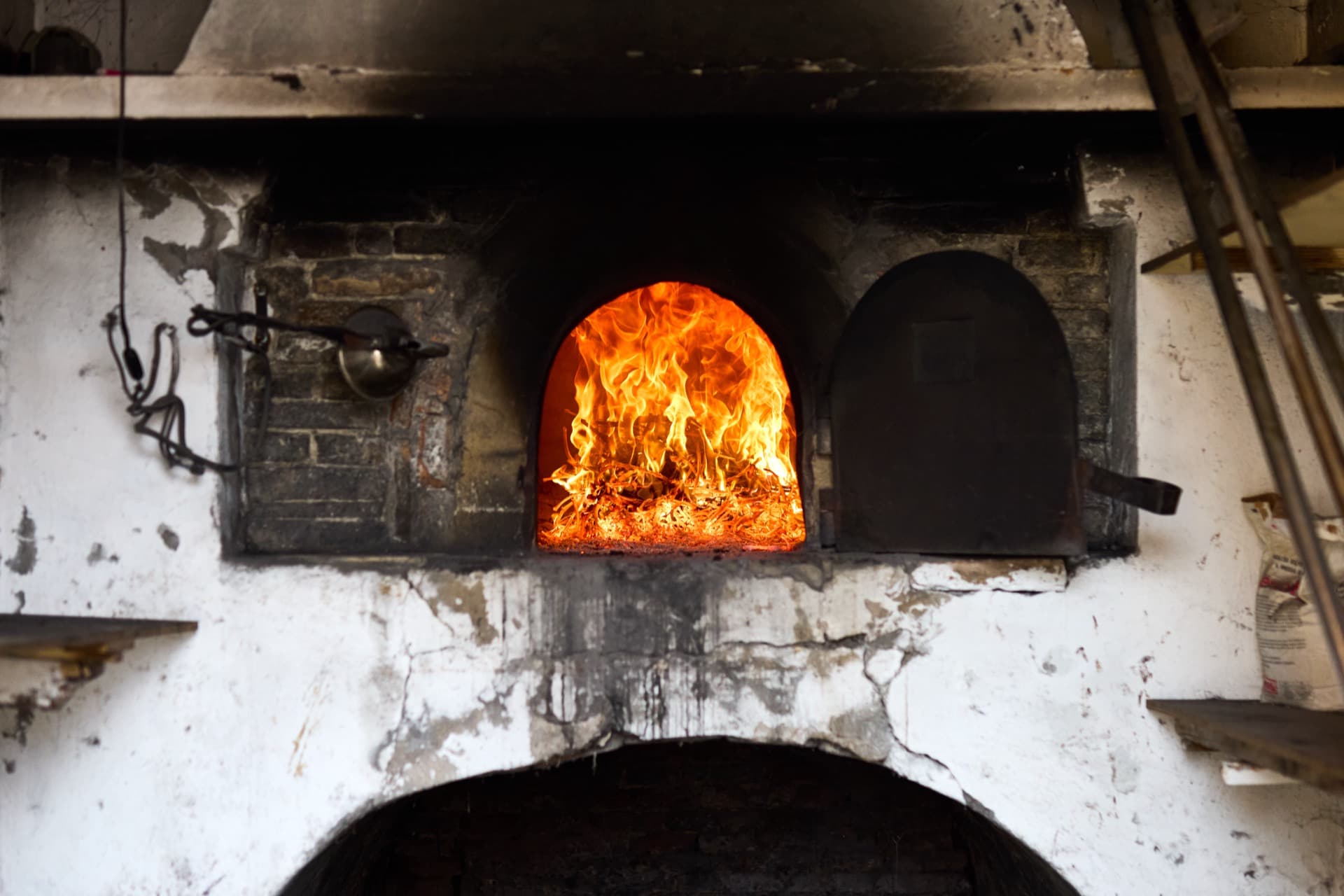
Crescia Oven
Documents tell us that a public oven had been in operation in Stacciola since the 1700s, which the community used to bake the basic necessity: bread. The bakery has existed since 1795 when the “Podestà” of Stacciola entrusted it for use to a baker to provide bread for the villagers. Subsequently, the bakery was given to the families who, in turn, and according to a precise calendar, bake bread, roast meat, sweets and - since 1987 - the famous “Crescia d'la Stacciola” during the August festival. At this time, the village was self-sufficient and, due to the small size of the community, since the baker's trade would not have ensured a family's livelihood, a public oven was provided. The use of the communal oven continued until 1970/72. Once a week, all the families in the village baked bread according to a precise schedule. The 1970s also marked profound changes in the small village of Stacciola: housewives started working, bakers from neighbouring villages delivered fresh bread several times a week, so the bakery fell into disuse except for a few special moments in village life: the baking of Easter Crescia, religious ceremonies and little else. The Citizens' Committee, set up in 1986 with the aim of enhancing the village's traditions, history and culture, took up the original recipe handed down over time and, to prevent it from being lost, reproposed it with ‘La Sagra della Crescia’. For some time now, the ingenious idea of having promoted a crescia school course where participants, at the end of the course, taste the crescia they have prepared and thus become custodians and disseminators of this ancient technique.
Cerasa Castle
In the period from the 12th to the 15th century, numerous castles of the “Comitato di Fano” were built and developed on the plain and hills to the left of the Cesano river. The first news about Cerasa, currently part of the municipal territory of San Costanzo, dates back to the Bull of Pope Adrian IV of 7 May 1156, later confirmed by the similar Bull of Pope Alexander III of 18 April 1178. In both Bulls, the Castle of Cerasa is mentioned under its ancient name of “Quercia fissa” or “Quercia Scissa”. The ancient medieval walls, perfectly intact, envelop this small, enchanting village like an embrace. When the castle was demolished in the 13th century, the monks of S. Paterniano used its rubble to build another on top of a hill not far away, called “Monte della Ceregia” from which the present name “Cerasa” derived. In 1380, a later Martinozzi named Domenico, also an Abbot, had the “Castle of Ceregia” restored and fortified with the unselfish and free work of all the castellans. In 1432, Ceregia, now Cerasa, despite being a small centre, did not hesitate to challenge the nearby San Costanzo and the powerful Malatesta Fano in order to defend the integrity of its borders. As has already been written, regarding the birth and development of the numerous castles of the “Fano Committee”, it should be noted that 18 of them, by now tired of the Fanese misrule, rose up against it and, instigated by Pandolfo II, appealed to Pope John XXII in Avignon against the Fanesi. The Pope welcomed the appeal very favourably, removed from the dominion of the city of Fano and subjected 18 castles of the “comitato quondam Fani” directly to the Church, i.e. to the rector of the Marca, forming the original nucleus of the vicariate of Mondavio. The castle of Cerasa remained outside this vicariate, but became part of it in the first half of the 15th century. The vicariate of Mondavio remained in subjection to the Church only for a few years because the Malatesta family always ruled it legitimately. In 1429, after a succession of family vicissitudes, with the death of Carlo Malatesta the vicariate of Mondavio returned to the Church, but only until 1433 when the Marca region was devastated by a rapid invasion by Captain Francesco Sforza of Milan, who conquered the vicariate of Mondavio. The two towers and the entrance gate with ramp are still visible, while inside the castle you can visit the Church of San Lorenzo Martire, with its baptismal font from 1629 and a Callido organ. The portal of Casa Giraldi, in terracotta and sandstone, is also noteworthy.
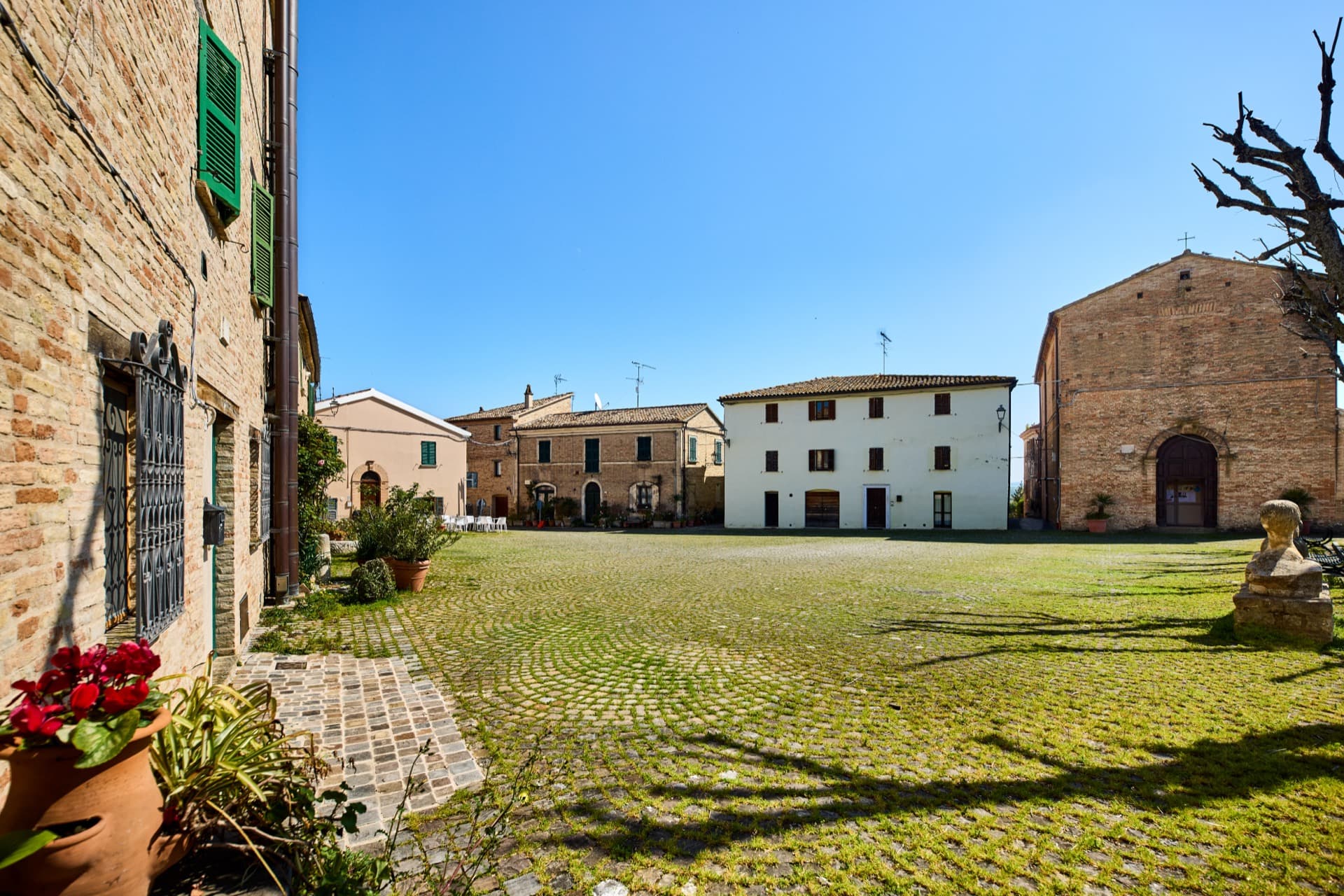
IV Novembre Square
The square, semi-enclosed by walls, a popular venue for shows and live music, overlooks the Cesano Valley, rising like a balcony overlooking a landscape characterised by vineyards and cultivated fields.
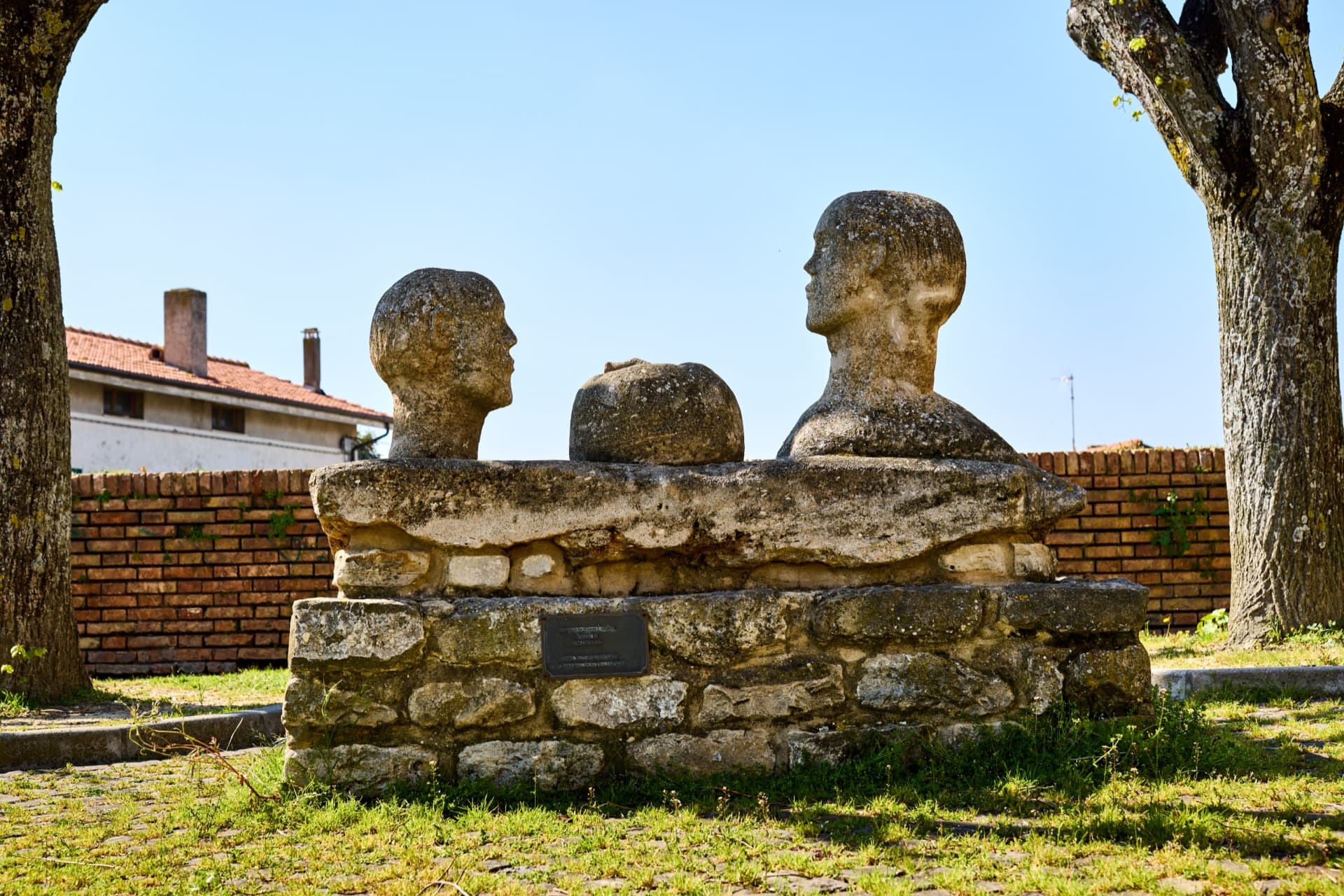
Sculpture "Dialogo Muto"
The sculptural work “Dialogo Muto” (Silent Dialogue) by Nazareno Rocchetti, originally located in the centre and now at the edge of Piazza IV Novembre, is one of the first creations of the artist from the Marche region, who donated it to the municipality of San Costanzo. The sculpture represents the symbol of life through the figure of a woman, a universal emblem of creation and nourishment. The two apparently distant sculpted faces turn towards the apple, symbolising Eden, a reference to knowledge and temptation. Between the faces one can perceive the setting of the sun, creating an atmosphere of reflection and introspection. The harmony between the shapes and the symbolism of the work invites the visitor to stop and reflect on the mystery of the silent dialogue that develops between the two faces and the object that unites them. The sculpture, with its message of quiet communication, represents an invitation to contemplation and the silent exchange between the parts, without the need for words.
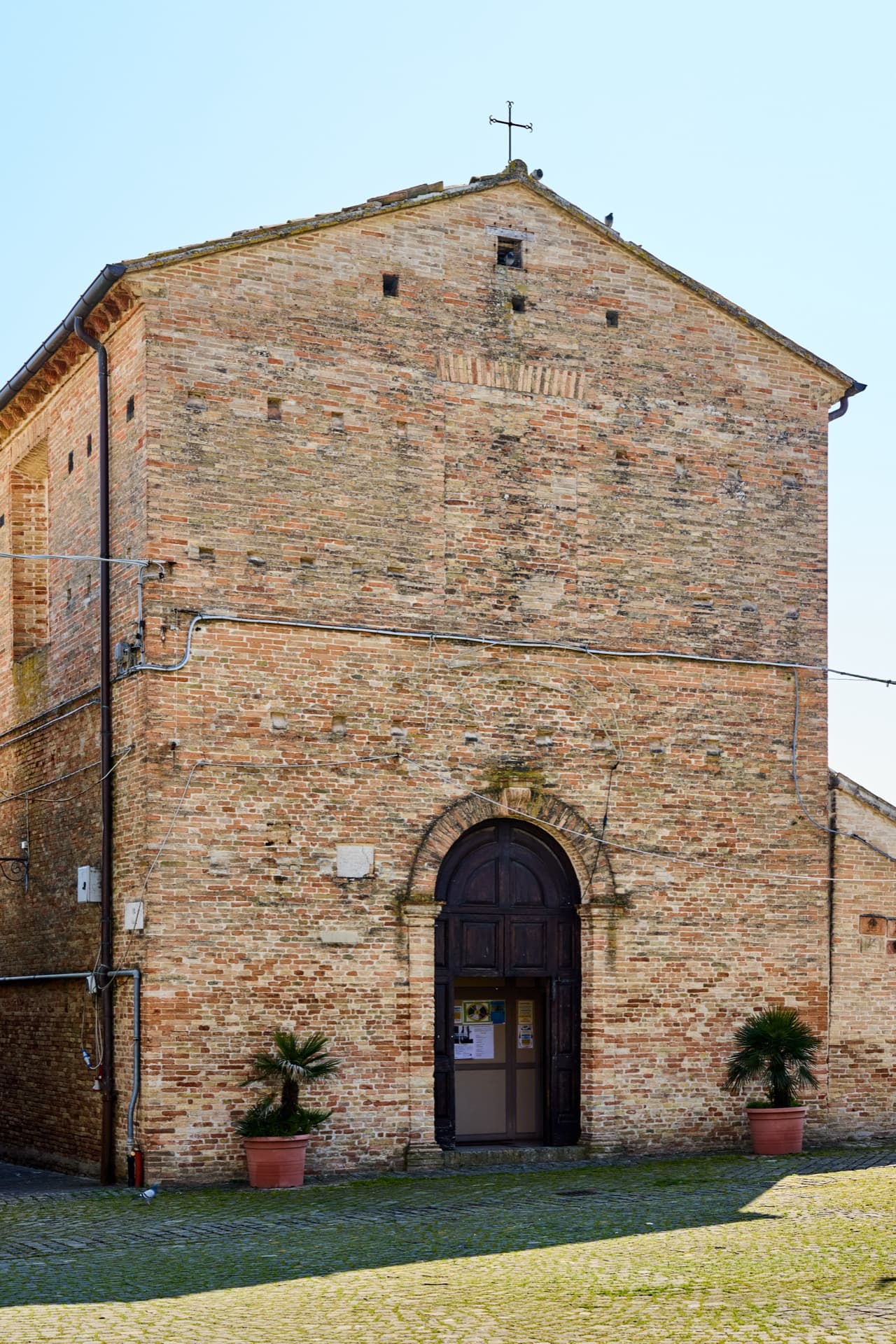
Church of San Lorenzo
In 1346, at the behest of Bernardo Martinozzi, abbot of the monastery of San Paterniano, the parish church dedicated to San Lorenzo Martire was built inside the Castle of Cerasa. This building was welcomed with great festivity by the population, who could thus see the residence of their parish priest and pastor on the site. The Church, after having withstood the ravages of time for many years, collapsed completely to the ground but, with perfect symmetry, was promptly rebuilt at the behest of another Martinozzi by the name of Paolo, also an abbot of the monastery of Fano. The rebuilding work was carried out under the direction of Cav, Francesco Bonamici, an architect from Rimini. The renovated church, which preserves a stone baptismal font dating back to 1629 and a beautiful 18th-century organ by the famous Gaetano Callido, has a plaque on the main façade bearing an inscription in Gothic characters recalling the primitive construction.
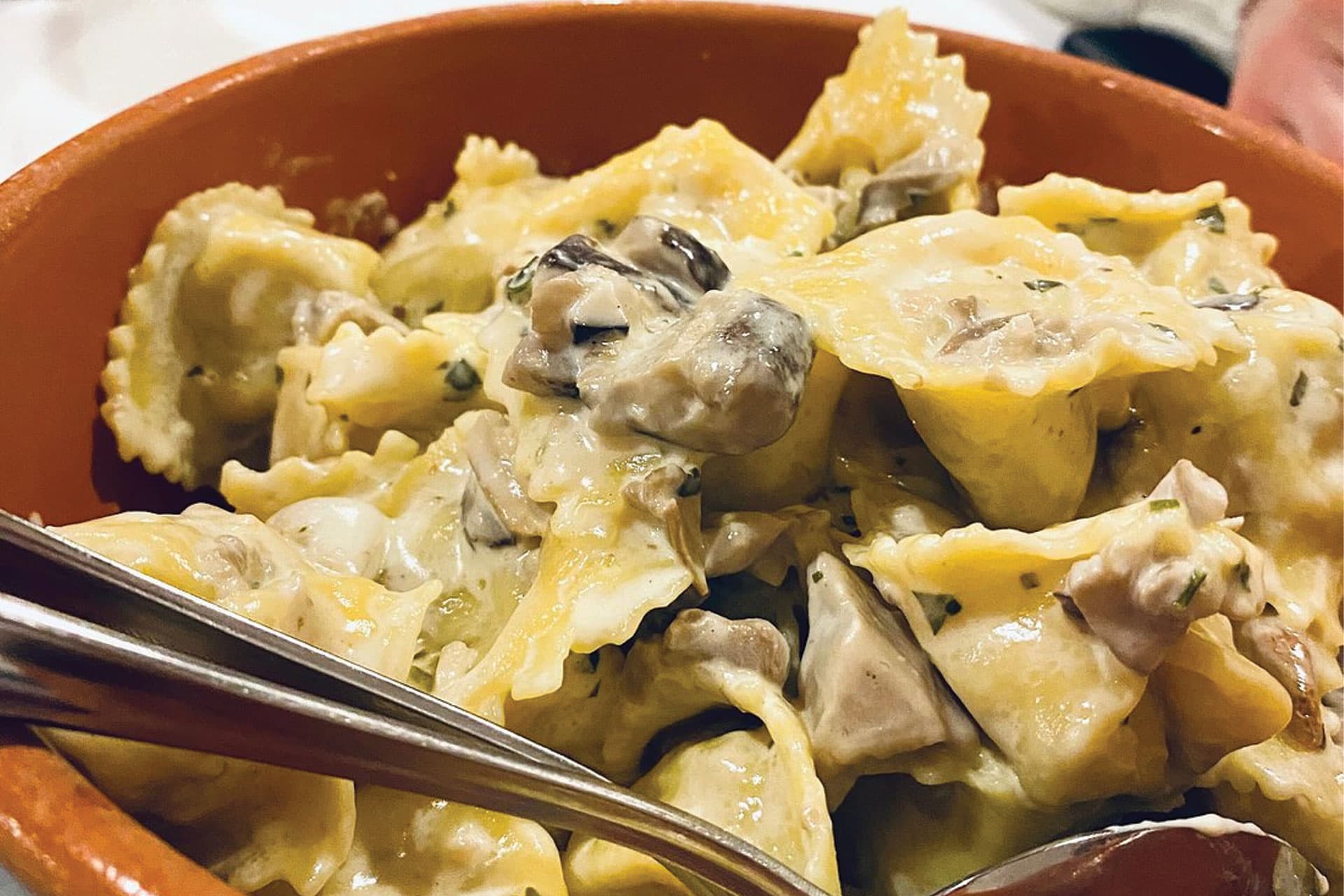
Taste
Depending on the time and location along the route, you can take a break and enjoy local specialties. Recommended restaurants and bars include La Grotta di Tufo in Stacciola, ideal for savoring typical dishes in a quaint setting; Locanda “La Cerasa” in Cerasa, perfect for lunch or dinner immersed in the hilly panoramas; and Caffè Centrale in San Costanzo, a go-to place for coffee, an aperitif, or a small snack during your visit.
-
Da Rolando’ Restaurant
Corso G. Matteotti, 127, 61039 San Costanzo PU - Tel: 0721950990 -
Divin Amore Restaurant
1 Via Divino Amore, San Costanzo, PU 61039 - Tel: 0721935011 -
La Grotta di Tufo
Via Stacciola Villa, 22, 61039 San Costanzo PU - Tel: 0721930074 -
Pizzeria Mar y Sierra
Str. S. Gervasio, 3, 61039 San Costanzo PU - Tel: 0721957174
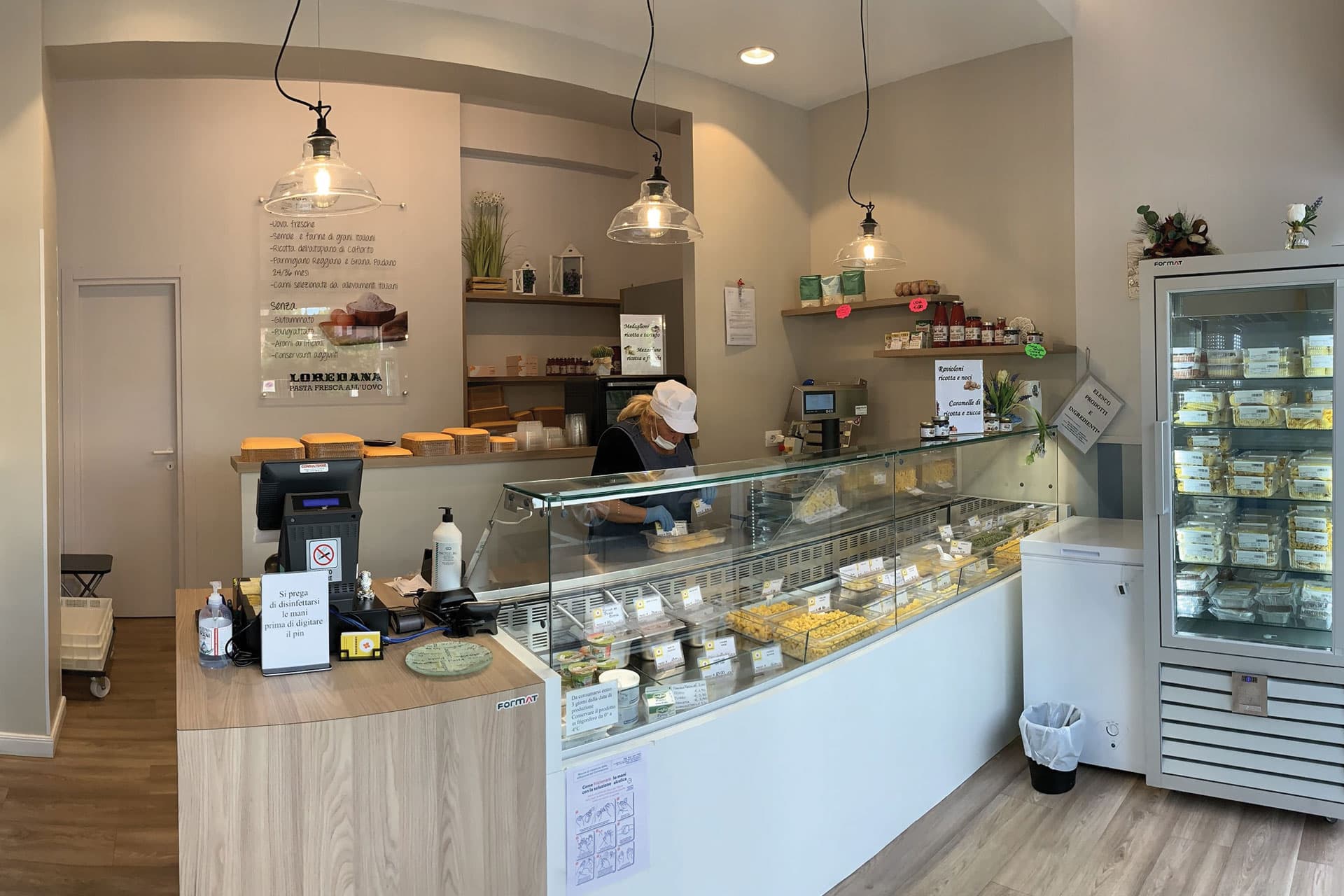
Shopping
For those who want to take home a memory of the area, along the route there are traditional shops such as I Fiori della Santa Elena, with floral offerings and decorative objects, and the Panificio Pasticceria Fratelli Pucci, where you can purchase baked goods and typical sweets, representative of the local gastronomic culture.
-
I Fiori della Santa Elena
Str. Solfanuccio, 27, 61039 San Costanzo PU - Tel: 0721950525 -
The Cartoidea
Str. S. Fortunato, 15, 61039 San Costanzo PU - Tel: 0721950702 -
Sartori Optics
Via Roma, 3, 61039 San Costanzo PU - Tel: 0721 935068 -
Scarponi Pharmacy
Corso G. Matteotti, 64, 61039 San Costanzo PU - Tel: 0721950238
Cellars
The tour to discover the municipality of San Costanzo also offers the chance to discover the wineries in the area, true treasure troves of history and winemaking tradition. Among the most interesting are the Cantina Bruscia, the Cantina Bartolacci and the Cantina Sor Rico, where visitors can participate in tastings and guided tours, immersing themselves in the connection between the territory and the wines that tell its identity.
-
Bartolacci Winery
- Tel: 3481556012 -
Bruscia Winery
- Tel: 0721 954801 -
Sor Rico Winery
- Tel: 320 8419306
Other Information
Categories
A piedi, Automobilistico
San Costanzo - i luoghi digitali dell'altrove - CUP I51J24000420001 - Questo intervento è stato realizzato con il contributo di 45.000€ dell’Unione europea Bando POR FESR Marche 2021-2027 - Asse 1 - Azione 1.2.2 - Int. 1.2.2.2 Bando per “Servizi digitali integrati”