San Costanzo
San Costanzo is known as the "Balcony on the Adriatic". Perched on the first hills of Pesaro, just minutes from Fano and Marotta, this village offers one of the most complete views in the region: on one side the blue sea, on the other the peaks of the Apennines. But San Costanzo is not just seen: it is the undisputed capital of a poor dish that has become king, Polenta, celebrated here with the oldest festival in all the Marche. Long Description 1. The Noble Salotto: Palazzo Cassi The historic center revolves around the imposing Palazzo Cassi, home of the noble family who ruled these lands for centuries. What you'll see: Recently restored, the palace is not only beautiful from the outside: it houses the Municipal Picture Gallery and a museum tour that tells the story of the local history, from Picene and Roman artifacts to sacred art. The atmosphere: Strolling through the internal courtyard or admiring the façade, you can still breathe the air of that "little ancient world" where the nobles of Pesaro came to spend their summer holidays. 2. A Unique Gem: The Teatro della Concordia San Costanzo houses a small eighteenth-century jewel, the Teatro della Concordia. The peculiarity: It was created inside the castle tower. But the real magic, which locals love to tell, is a unique architectural detail: it is said to be the only theater in the world from which, standing on the stage and opening the back doors and the stalls windows, you can see the sea. A natural stage effect that left the actors speechless. 3. The Collective Rite: La Sagra Polentara Forget modern tourist festivals. Polenta is a serious thing here, celebrated continuously for over 200 years (the first edition dates back to the early 19th century). History: Born as an act of charity by the Cassi Counts who offered a hot meal to the poor during Lent, today it is usually held on the first Sunday of Lent (or in July in a summer version). The Secret: Polenta is prepared in the square by the "polentari" using huge copper pots over a wood fire, following a secret sauce recipe that requires hours of slow cooking. Tasting it in the square, elbow to elbow with the locals, is an anthropological experience. 4. Gastronomy and Surroundings: La Crescia della StacciolaSan Costanzo has two historic hamlets, Cerasa and Stacciola, which are small villages within the village. La Stacciola: This tiny town is famous for Crescia (not to be confused with piadina romagnola or crescia di Urbino), a local variation cooked over charcoal, thicker and tastier, perfect for accompanying wild herbs and cured meats. Wine: Sei nelle terre del Bianchello del Metauro DOC, a fresh and savoury white wine that originates right on these sea-ventilated hills, perfect for degreasing the richness of polenta or crescia. Logistics Tips for the Visit How long it takes: Half a day is perfect. The afternoon is ideal to enjoy the sunset from the belvedere of the walls, when the sun descends behind Mount Catria and the sea turns pink. Strategic Location: San Costanzo is a great alternative for sleeping if you want to go to the beach in Marotta (which is only a 5-minute drive away) but prefer the tranquility and coolness of the hill in the evening. Fun fact: Look for the "Walk of the 100 Fontanili". If you enjoy light trekking, there are marked routes in the surrounding countryside that reach ancient water sources where washerwomen once met.
San Costanzo is known as the "Balcony on the Adriatic". Perched on the first hills of Pesaro, just minutes from Fano and Marotta, this village offers one of the most complete views in the region: on one side the blue sea, on the other the peaks of the Apennines. But San Costanzo is not just seen: it is the undisputed capital of a poor dish that has become king, Polenta, celebrated here with the oldest festival in all the Marche.
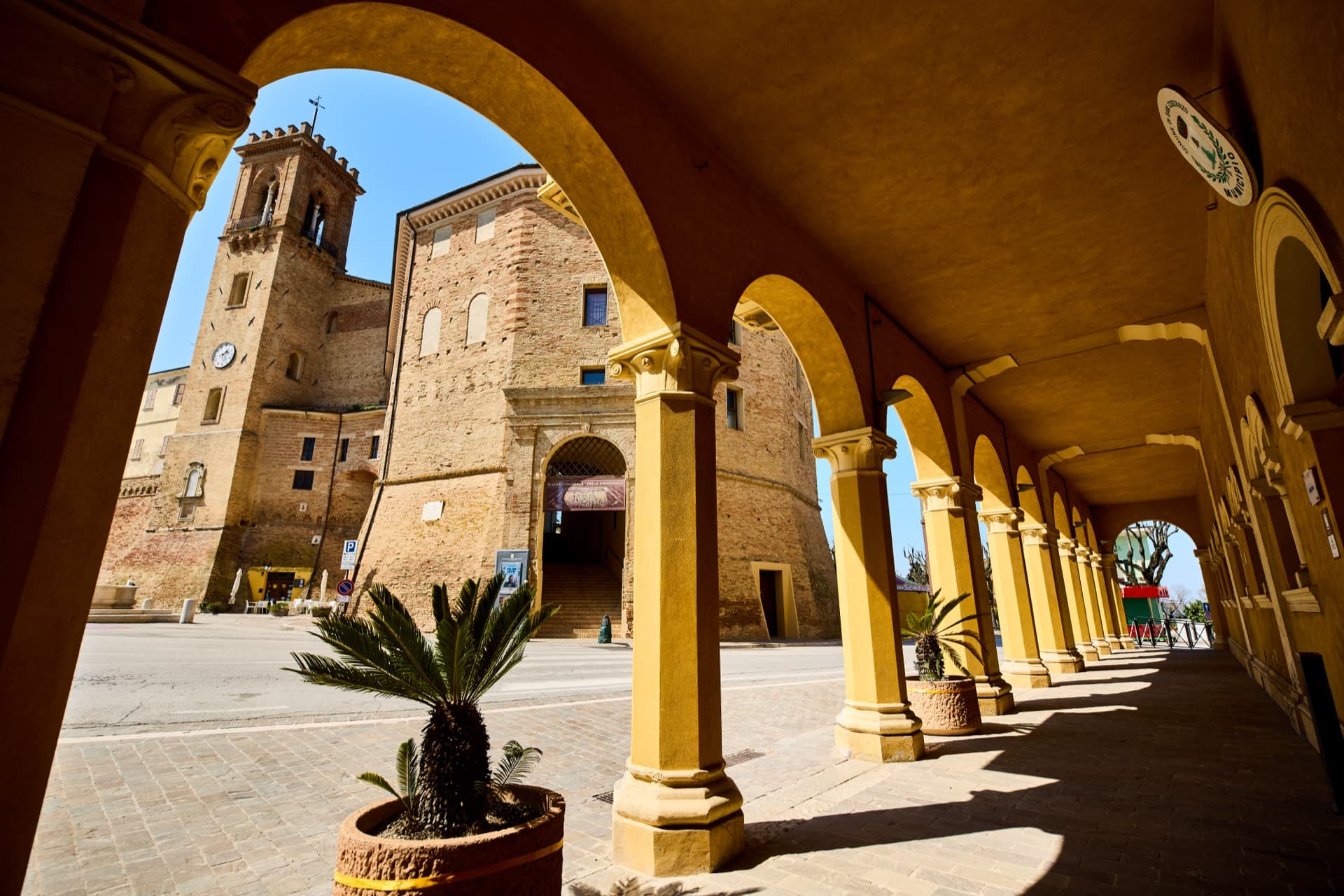
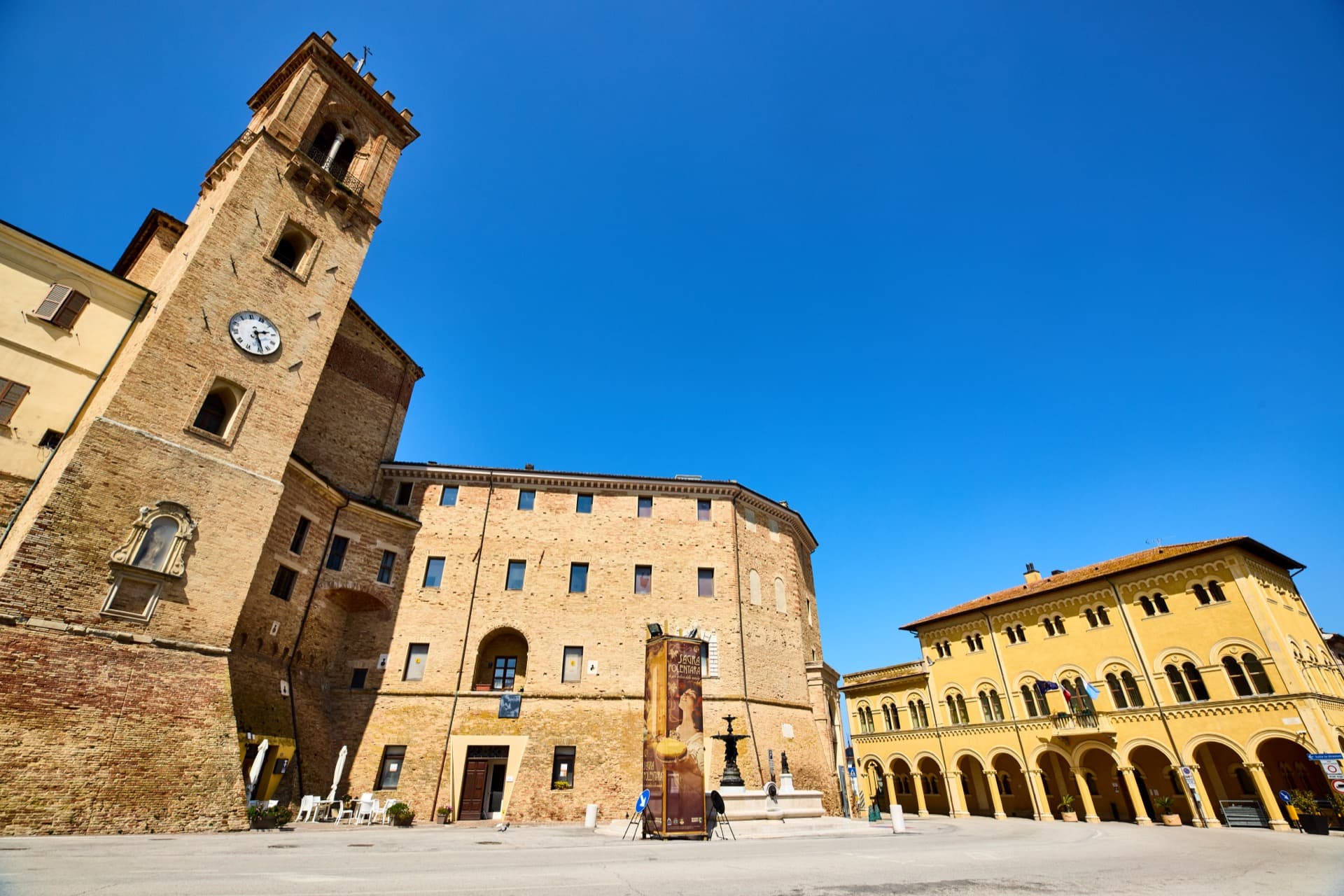
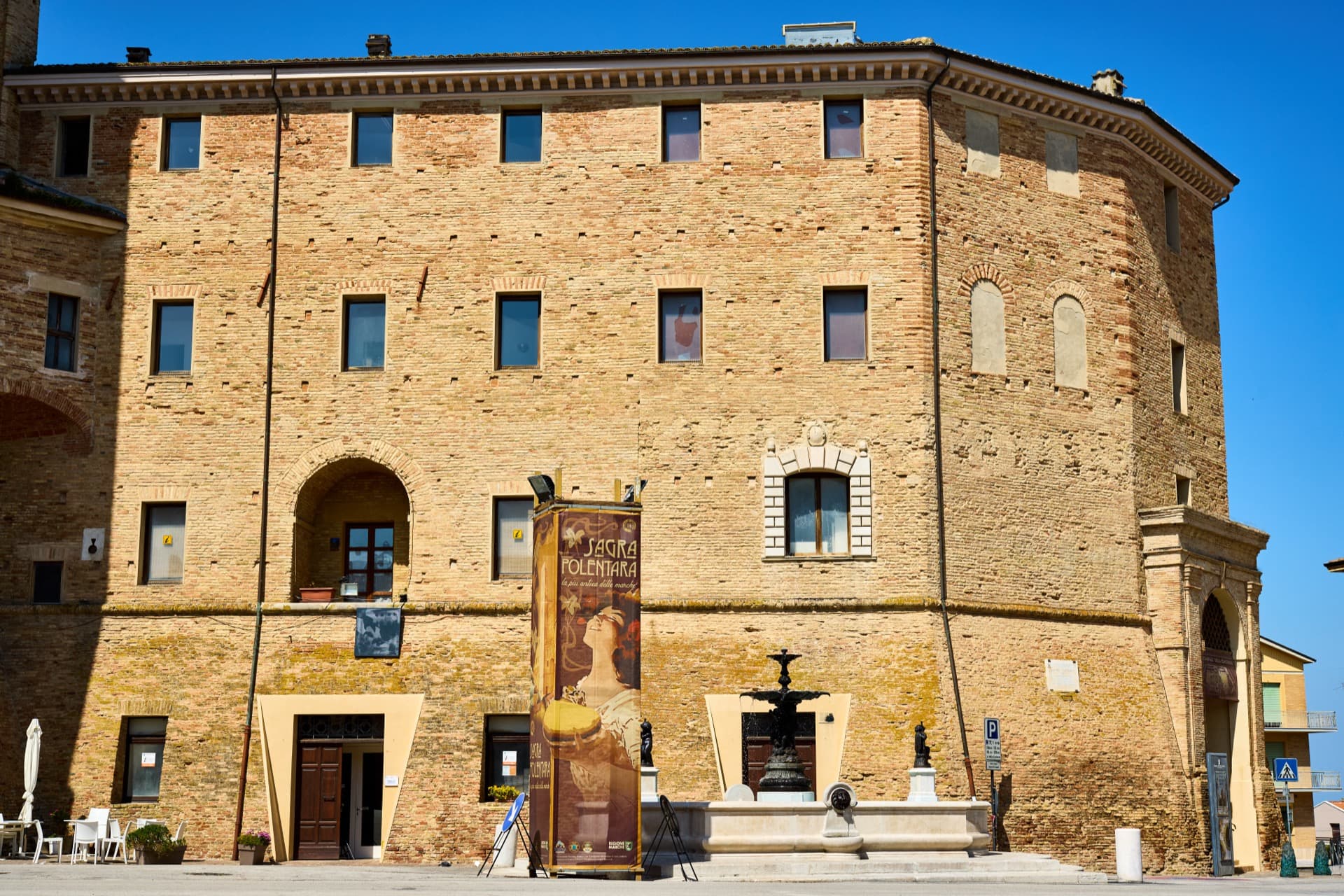
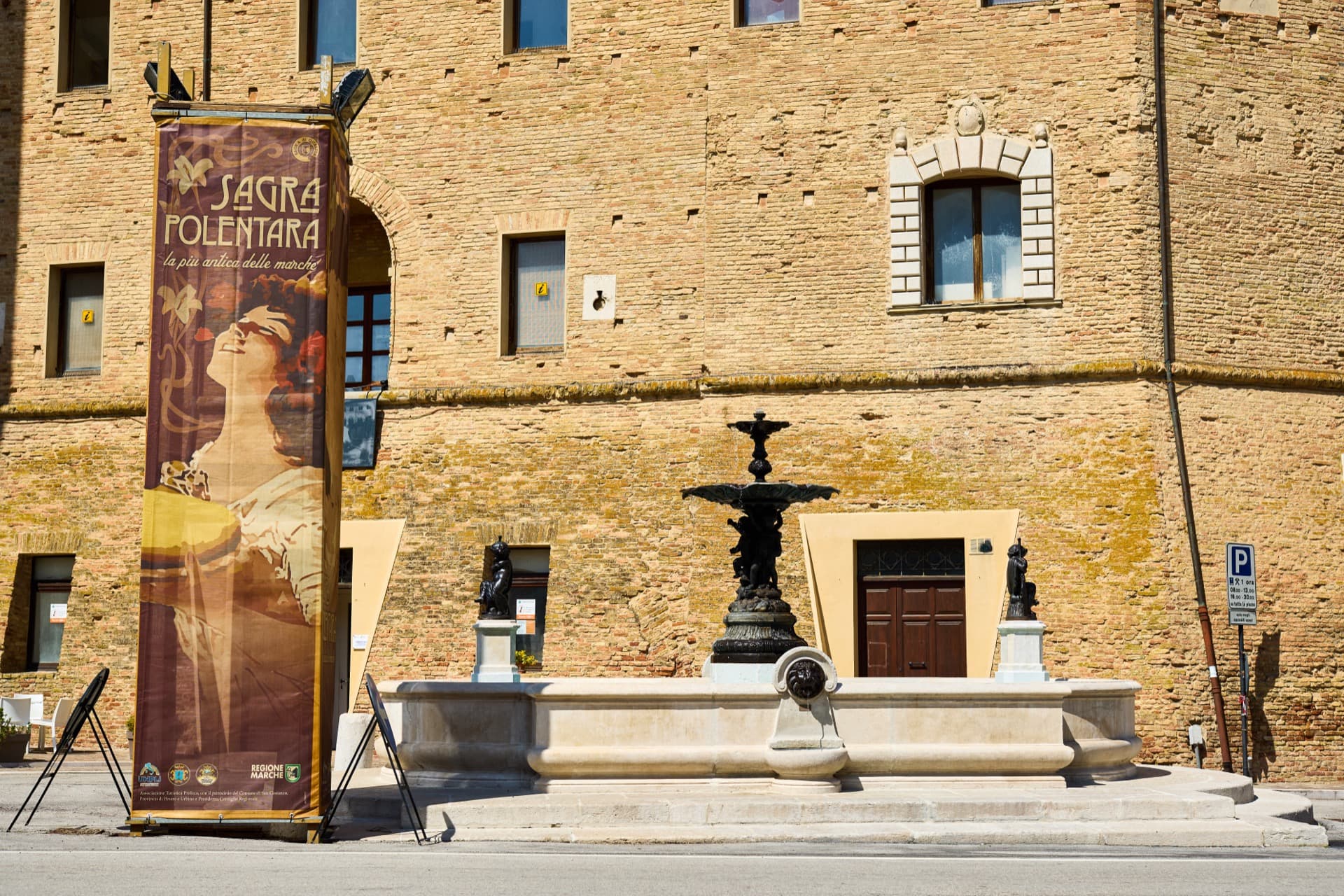
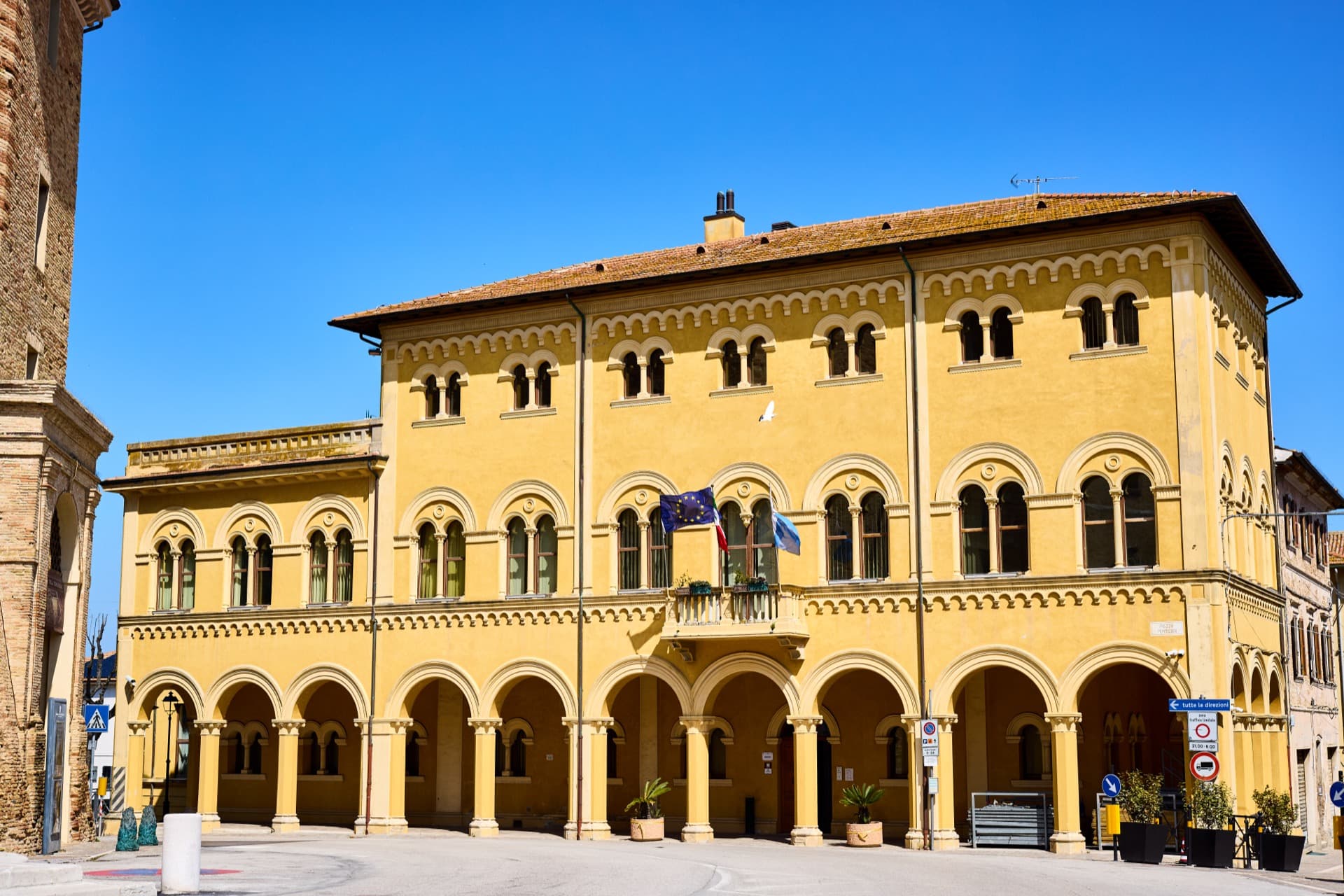
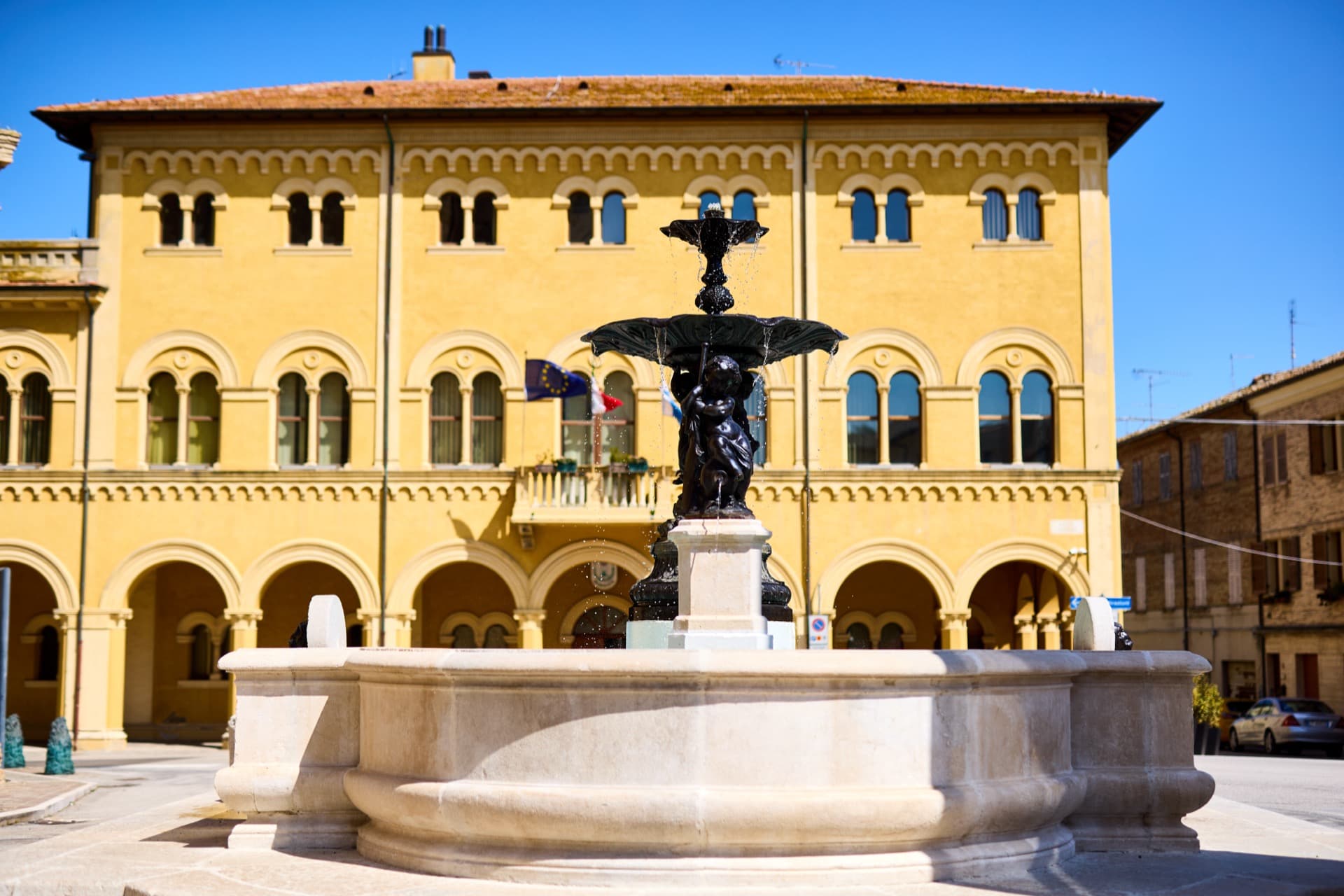
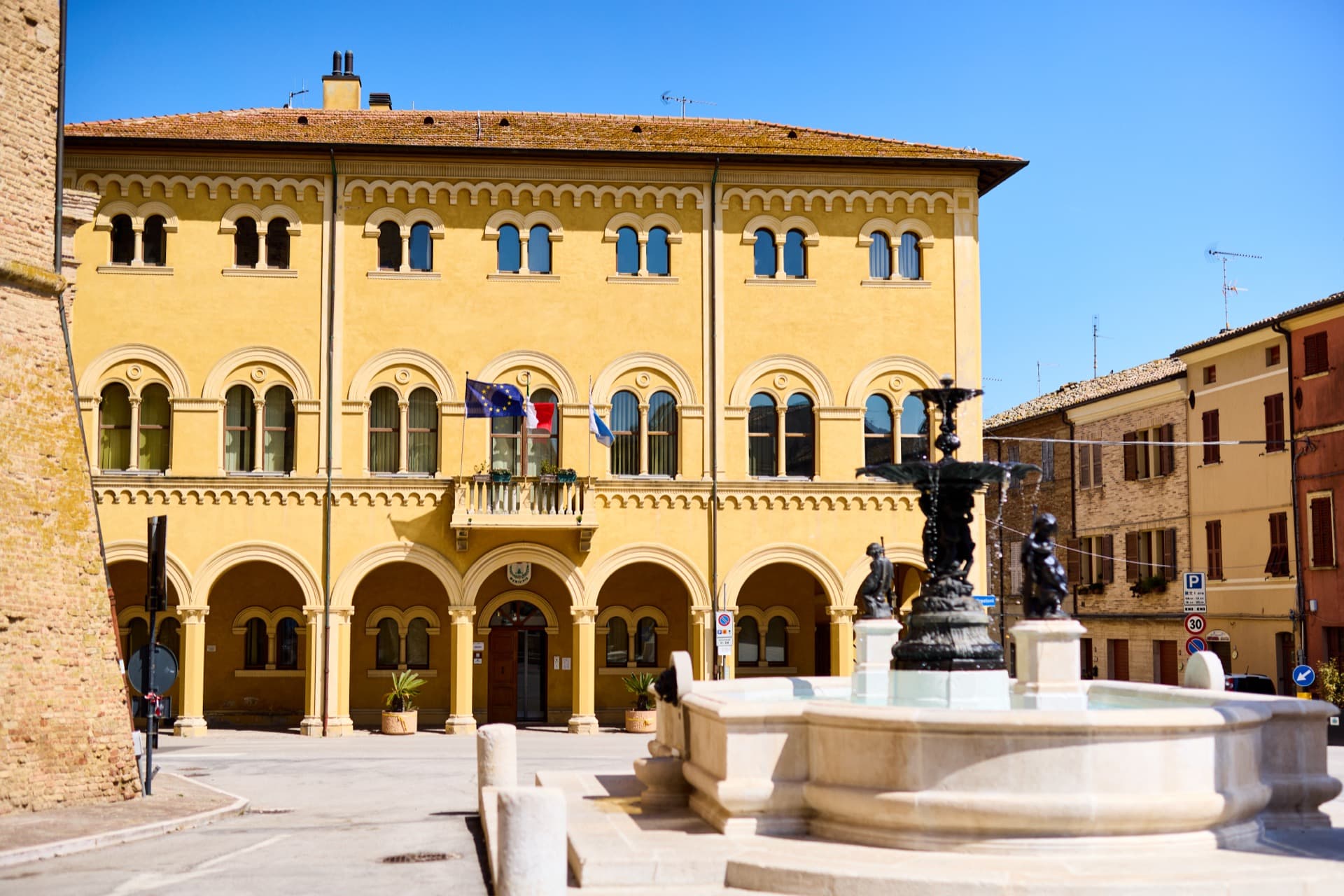
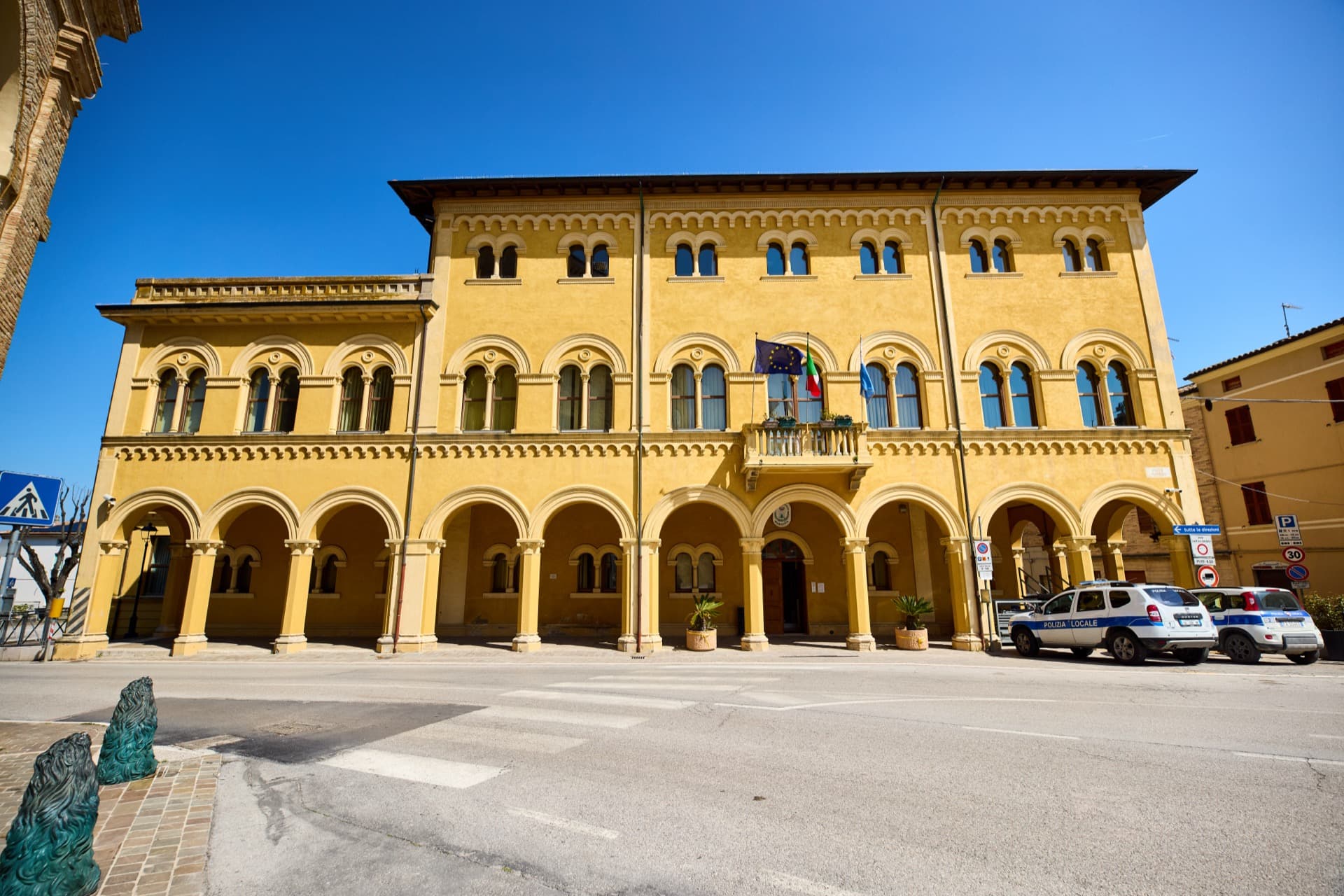
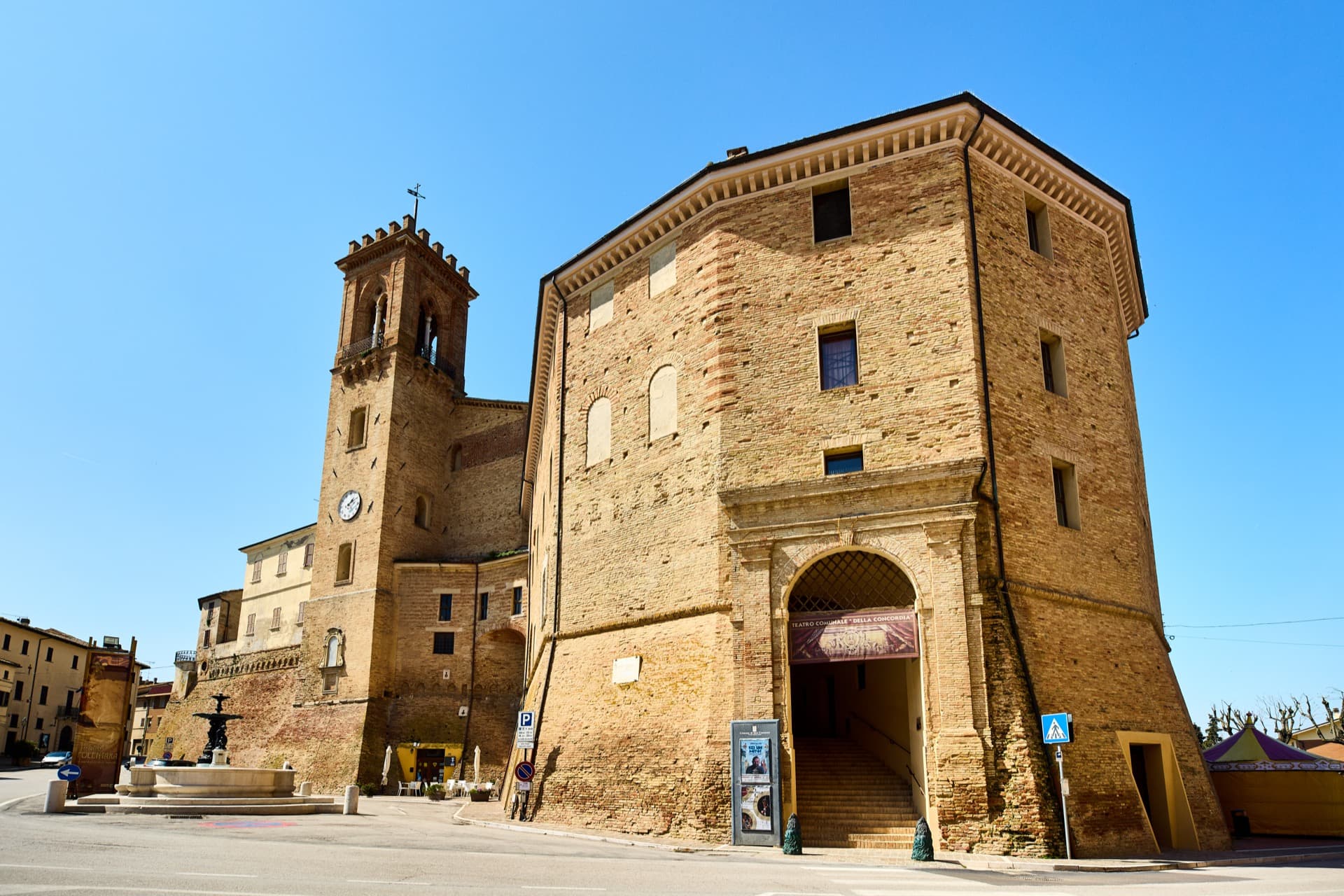
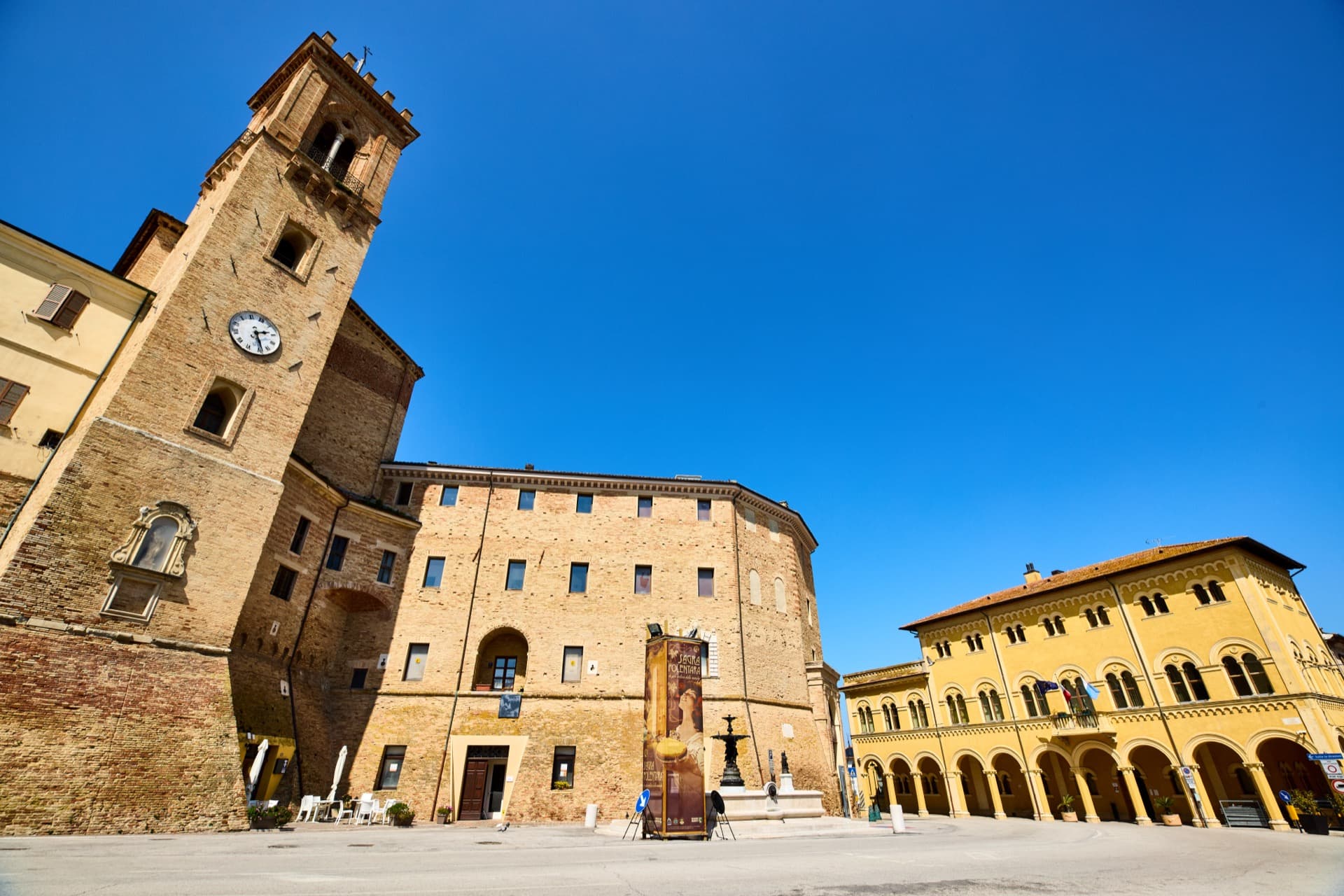
The Noble Salotto: Palazzo Cassi The historic center revolves around the imposing Palazzo Cassi, home of the noble family who ruled these lands for centuries.
- What you'll see: Recently restored, the palace is not only beautiful from the outside: it houses the Municipal Picture Gallery and a museum tour that tells the story of the local history, from Picene and Roman artifacts to sacred art.
- The atmosphere: Strolling through the internal courtyard or admiring the façade, you can still breathe the air of that "little ancient world" where the nobles of Pesaro came to spend their summer holidays.
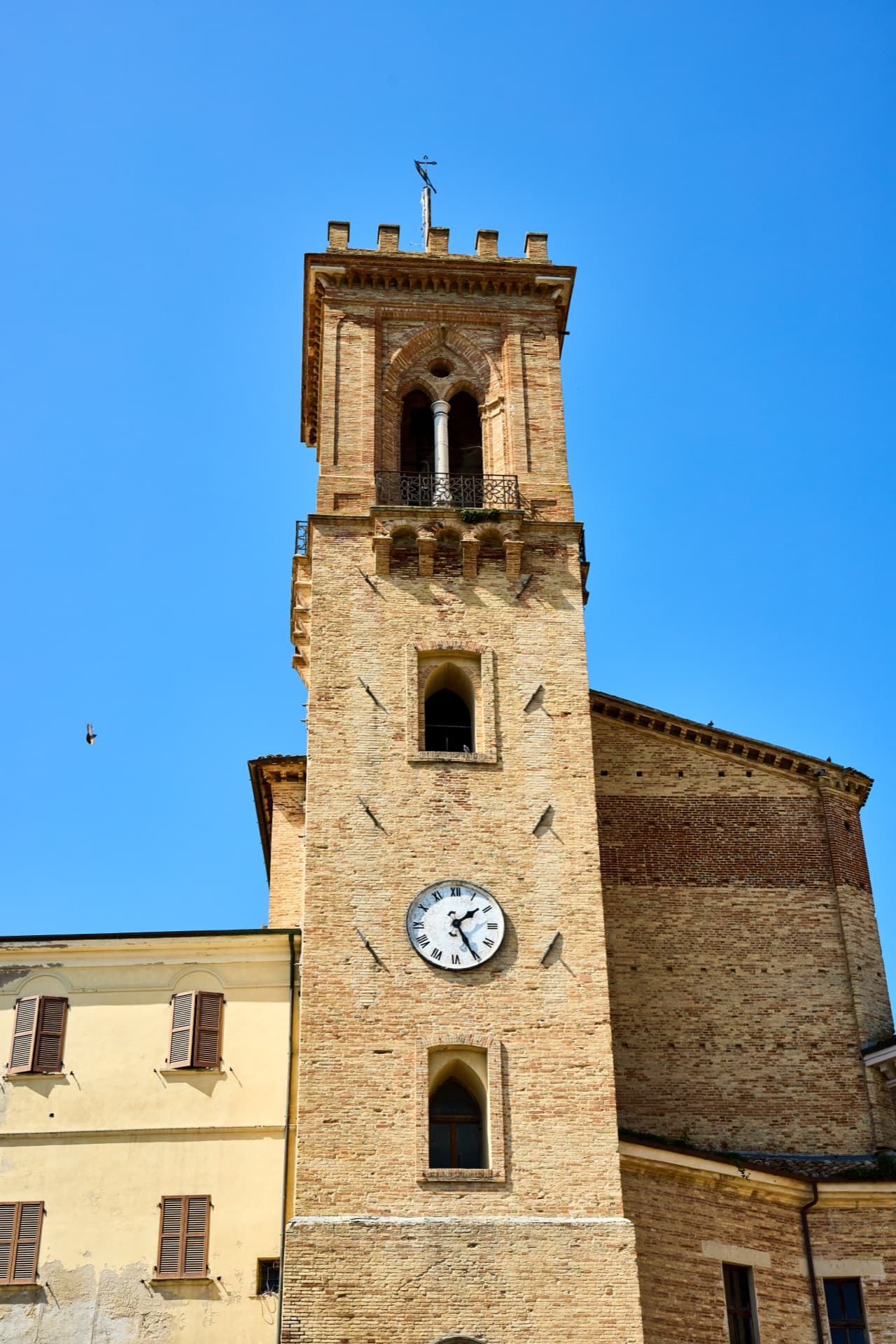
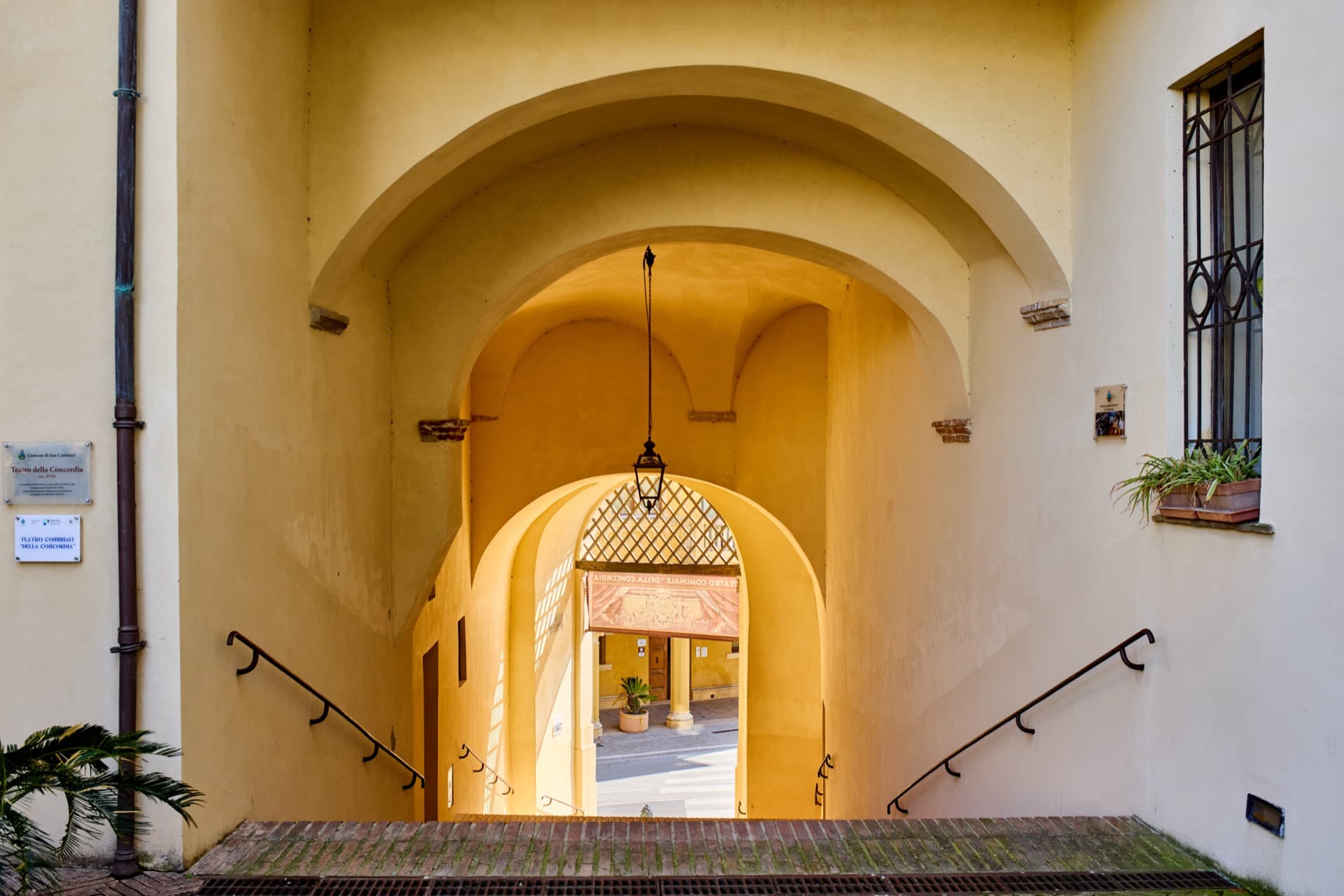
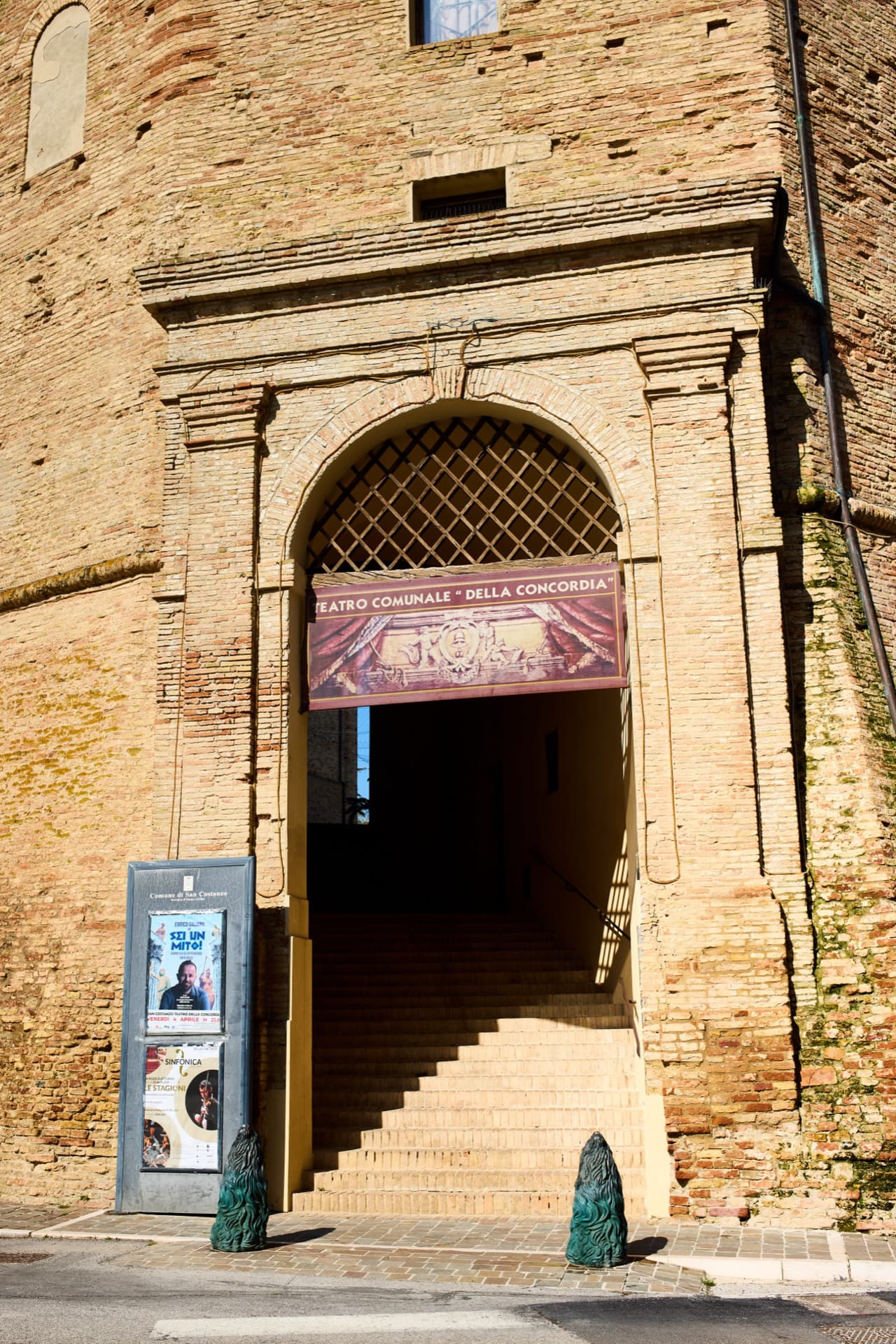
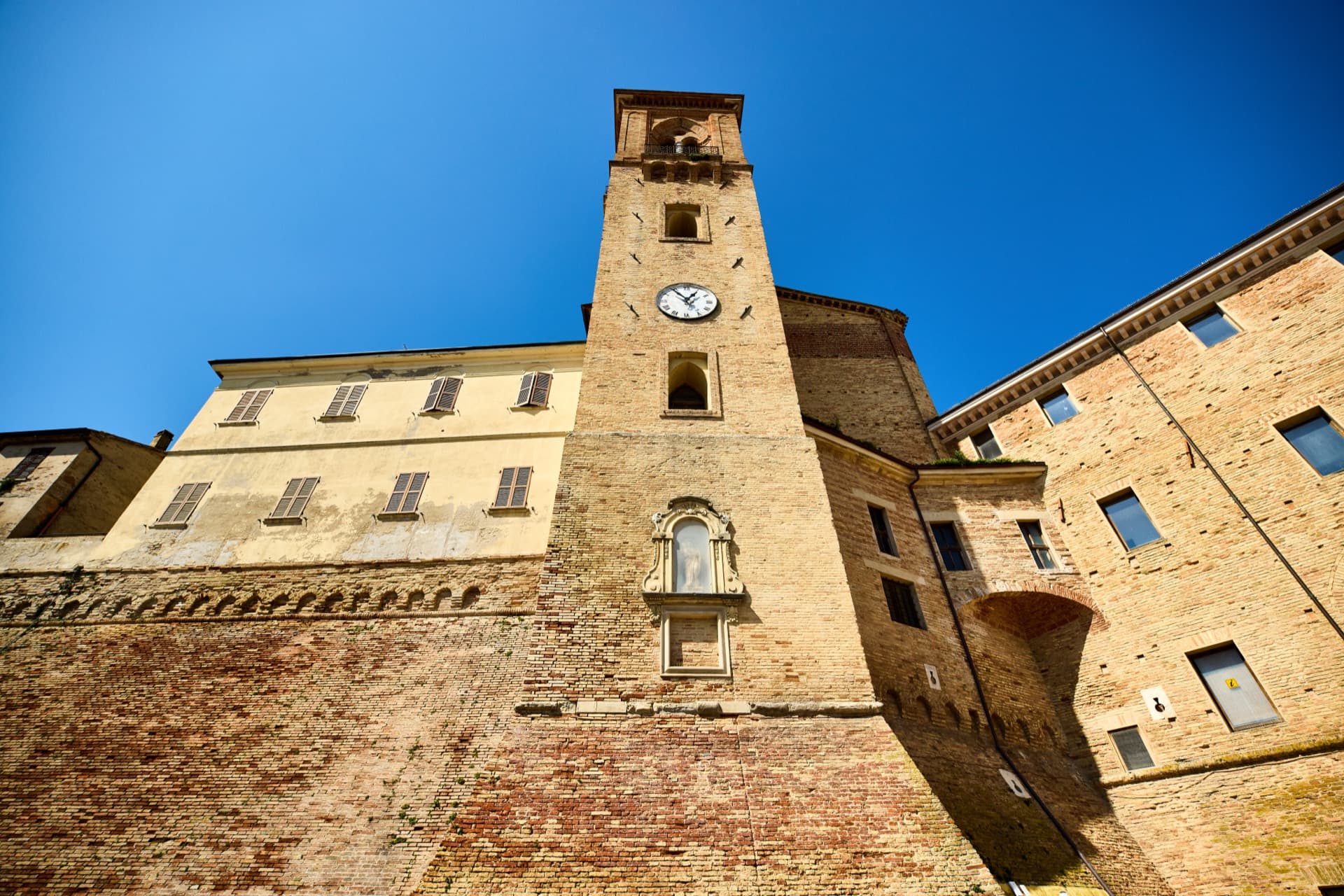
- The peculiarity: It was created inside the castle tower. But the real magic, which locals love to tell, is a unique architectural detail: it is said to be the only theater in the world from which, standing on the stage and opening the back doors and the stalls windows, you can see the sea. A natural stage effect that left the actors speechless.
- History: Born as an act of charity by the Cassi Counts who offered a hot meal to the poor during Lent, today it is usually held on the first Sunday of Lent (or in July in a summer version).
- The Secret: Polenta is prepared in the square by the "polentari" using huge copper pots over a wood fire, following a secret sauce recipe that requires hours of slow cooking. Tasting it in the square, elbow to elbow with the locals, is an anthropological experience.
- La Stacciola: This tiny town is famous for Crescia (not to be confused with piadina romagnola or crescia di Urbino), a local variation cooked over charcoal, thicker and tastier, perfect for accompanying wild herbs and cured meats.
- Wine: Sei nelle terre del Bianchello del Metauro DOC, a fresh and savoury white wine that originates right on these sea-ventilated hills, perfect for degreasing the richness of polenta or crescia.
Tips for the visit:
- How long it takes: Half a day is perfect. The afternoon is ideal to enjoy the sunset from the belvedere of the walls, when the sun descends behind Mount Catria and the sea turns pink.
- Strategic location: San Costanzo is a great alternative for sleeping if you want to go to the beach in Marotta (which is only a 5-minute drive away) but prefer the tranquillity and coolness of the hill in the evening.
- Fun Fact: Look for the "Camminata dei 100 Fontanili".If you enjoy light trekking, there are marked trails in the surrounding countryside that reach ancient water sources where washerwomen once met.
Galleria
Dove
Altre Informazioni
Categorie
Monumento, Museo, Punti panoramici, Storico, Architettura
Potrebbe interessarti anche

San Costanzo - i luoghi digitali dell'altrove - Questo intervento è stato realizzato con il contributo dell’Unione europea Bando POR FESR Marche 2021-2027 - Asse 1 - Azione 1.2.2 - Int. 1.2.2.2 Bando per “Servizi digitali integrati”



